Distinguishing Combat Striking from Aerobic Bag Work
Walking into a striking facility for the first time can feel disorienting because gyms tend to divide their curriculum into two distinct paths: functional combat training and music-driven aerobic conditioning. While traditional Muay Thai and technical kickboxing focus on sparring distance, defensive movement, and fight mechanics, cardio-focused workouts borrow those same movements purely to elevate the heart rate. Choosing the wrong setting often leaves students frustrated, whether an aerobic exerciser is overwhelmed by full-contact drills or a combat sports enthusiast is handed light neoprene weights.
Technical striking classes spend significant time on stance, balance recovery, and how power travels from the balls of the feet through the hip rotation. In these environments, you learn how to turn your body behind a hook and step off the center line after kicking. Instructors will halt drills to correct a dropped guard or fix improper weight distribution. Conditioning occurs naturally as a byproduct of repeating powerful strikes against resistance over multi-minute rounds, but technical execution always takes priority over continuous movement.
In contrast, group aerobic sessions emphasize high caloric expenditure, cardiovascular endurance, and choreographed combinations synced to upbeat music. These classes rarely involve direct human contact, sparring, or intensive defensive drills; instead, participants strike freestanding foam targets or shadowbox in unison. If your goal is general conditioning without the risk of bruising, reviewing dedicated kickboxing classes will help you identify whether a gym leans toward athletic fitness or authentic martial arts pedagogy.
What to Expect in Beginner Striking Programs
Introductory training typically begins with the absolute fundamentals: wrapping your hands correctly, understanding a neutral fighting stance, and learning basic footwork patterns. A proper beginner session introduces you to the numbering system for punches—jab, cross, hook, and uppercut—while drilling basic defensive resets. Coaches generally emphasize that power is generated from the floor rather than the shoulder, ensuring that new practitioners do not hyperextend their elbows or strain their wrists during early workouts.
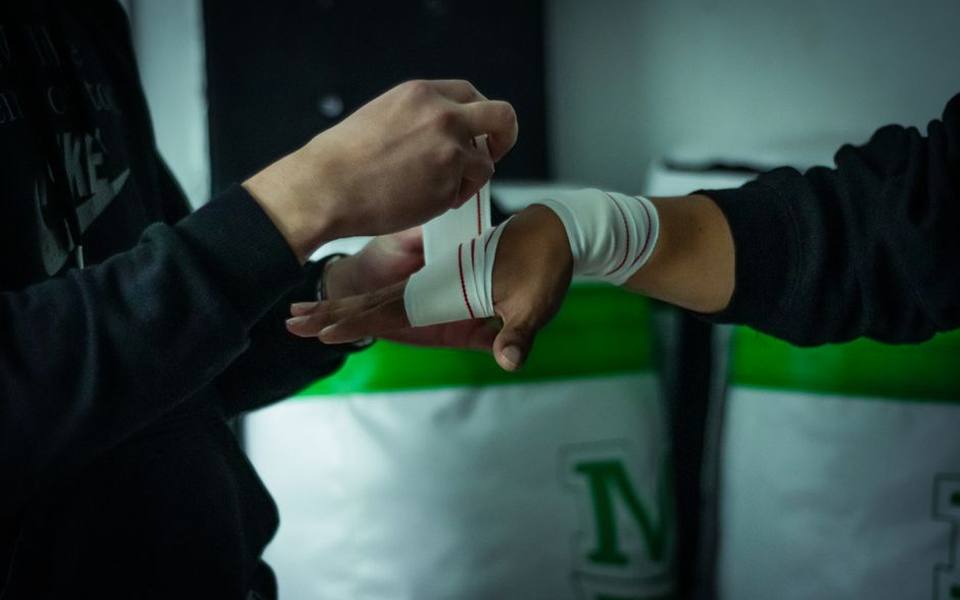
The pacing in a novice class is structured to build physical literacy before testing your stamina. You will usually spend ten to fifteen minutes warming up with skipping rope, dynamic stretches, and agility ladders to loosen the calves and hips. From there, the coach demonstrates a single offensive sequence, breaking it down into component movements so you can drill it repeatedly at half-speed with a training partner or on a heavy bag.
Sparring is almost never part of an authentic beginner curriculum. Responsible academies protect new students by keeping contact strictly limited to padded surfaces, like Thai pads, focus mitts, and double-end bags, until fundamental control is proven. You should expect mild soreness in the arches of your feet, shins, and core muscles during your first few weeks, as moving constantly on your toes while maintaining a defensive posture recruits stabilizing muscles rarely used in everyday life.
The Art of Eight Limbs and Essential Pad Drills
Muay Thai differentiates itself from other forms of kickboxing through its classification as the art of eight limbs. While traditional Western kickboxing primarily utilizes punches and kicks above the waist, Muay Thai incorporates elbows, knees, and active grappling control. The kicking mechanics also diverge significantly: a Muay Thai roundhouse is delivered with a straight leg and rotational hip momentum designed to drive through the target using the dense bone of the lower shin, rather than snapping the foot like a karate kick.

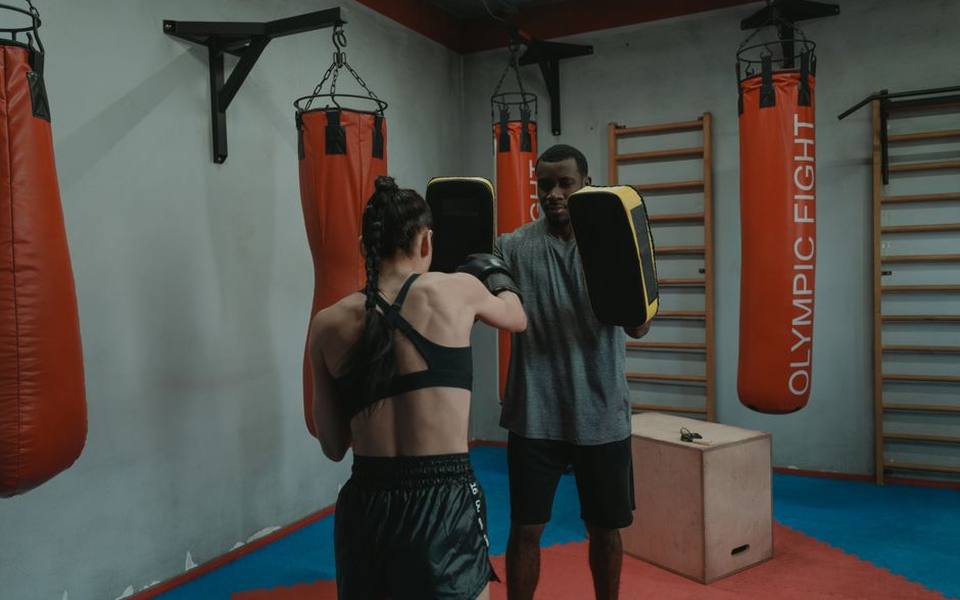
Pad work forms the core of authentic Thai boxing development, serving as the bridge between solo bag training and live sparring. A skilled coach holds dense rectangular forearm pads, known as Thai pads, angling them precisely to simulate the anatomy of an opponent. During these two-to-three-minute rounds, the feeder calls combinations, feeds counter-strikes for you to slip or block, and forces you to maintain an active defensive shell between offensive bursts.
Working the pads teaches you how to manage striking range, adjust your rhythm, and deliver impact while under cardiovascular fatigue. You will practice the teep, or push kick, to keep aggressive opponents back, step through with sharp diagonal knees, and pivot into short horizontal elbows. Because proper pad holding requires just as much technique as striking, learning to hold for partners becomes an indispensable skill in any serious gym community.
Inside the Standup Struggle: Mechanics of Clinch Work
Clinching is often the most surprising element of training for newcomers because it looks like exhausted wrestling from the outside but functions as an intricate, violent standup battle. Rather than breaking fighters apart when they collide at close range, Muay Thai rules allow extended exchanges of upper-body control, knee strikes, and sweeps. Clinch training requires significant neck, back, and forearm strength to control an opponent's posture while protecting your own head from upward elbow strikes.
The primary objective inside the clinch is establishing inside control, often referred to as the plum or double-collar tie. By placing your palms on the crown of your training partner's head rather than wrapping around the neck, you can pull their head forward and down, breaking their spinal posture. Once posture is broken, the defender cannot generate punching power and becomes vulnerable to driving knees into the ribs and abdominal wall.
Escaping and counter-balancing inside the clinch involves subtle shifts in hand positioning, swimming your arms up through the center, and using your hips to off-balance your partner. Coaches regularly pair students up for five-minute continuous clinch rounds where strikes are merely simulated with soft touches while partners focus entirely on grip fighting, foot sweeps, and leverage. It is a grueling discipline that quickly separates general fitness kickboxers from authentic Thai practitioners.
Cardio Kickboxing Workouts and Conditioning Goals
For students who want the calorie burn of combat sports without partner impact or contact drills, dedicated aerobic sessions provide an intense, full-body workout. These classes replace partner pads with heavy bags, teardrop bags, or free shadowboxing, cycling through fast-paced intervals designed to test aerobic and anaerobic thresholds. A standard forty-five to sixty-minute class combines continuous combinations with bodyweight movements like burpees, mountain climbers, and squat jumps.
Because these formats prioritize constant movement, they serve as excellent fat loss programs that stimulate muscular endurance without beating up your joints. Instructors curate high-tempo playlists that dictate the work rate, pushing you through thirty-second burnout drills where you throw non-stop straight punches or alternating teeps against the bag. This creates significant post-exercise oxygen consumption, helping you burn calories long after the session finishes.
It is worth noting that while these conditioning programs build athletic stamina and lean muscle, they do not automatically teach self-defense or competitive timing. Bag routines cannot react to your openings, counter-punch, or punish bad footwork. As long as you approach these classes as high-energy conditioning rather than ring preparation, they remain among the most engaging and sustainable ways to improve cardiovascular health and shed body weight.
Cross-Training Striking with Ground Disciplines
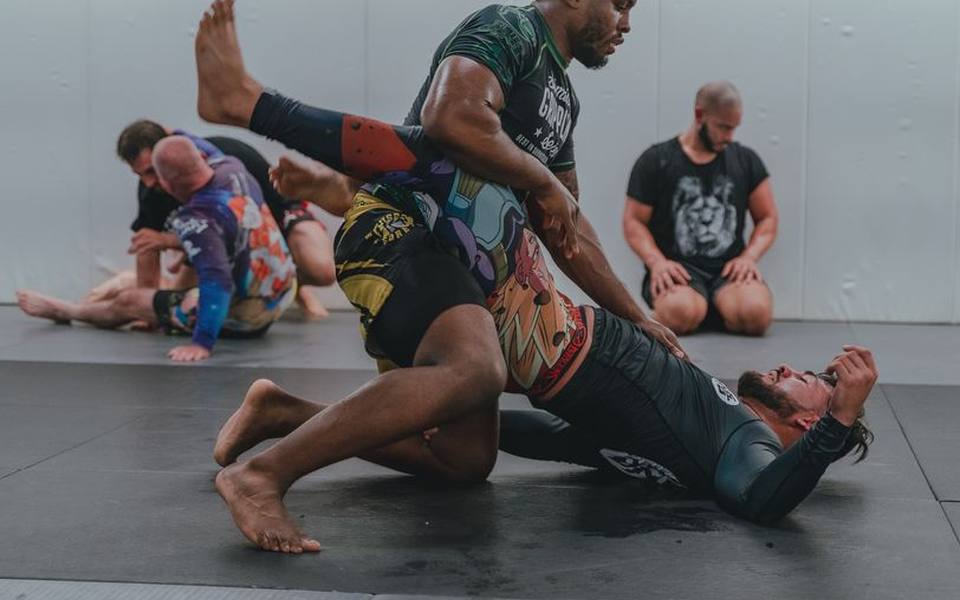
An increasing number of modern martial arts academies have transitioned to integrated formats where striking and grappling share mat space under one roof. Training in striking alongside ground arts like Brazilian Jiu-Jitsu produces well-rounded athletic attributes, balancing the explosive, rotational demands of kickboxing with the isometric pressure and isometric endurance required for grappling. This dual curriculum approach keeps training varied and prevents the muscular imbalances that can develop from focusing on a single combat discipline.
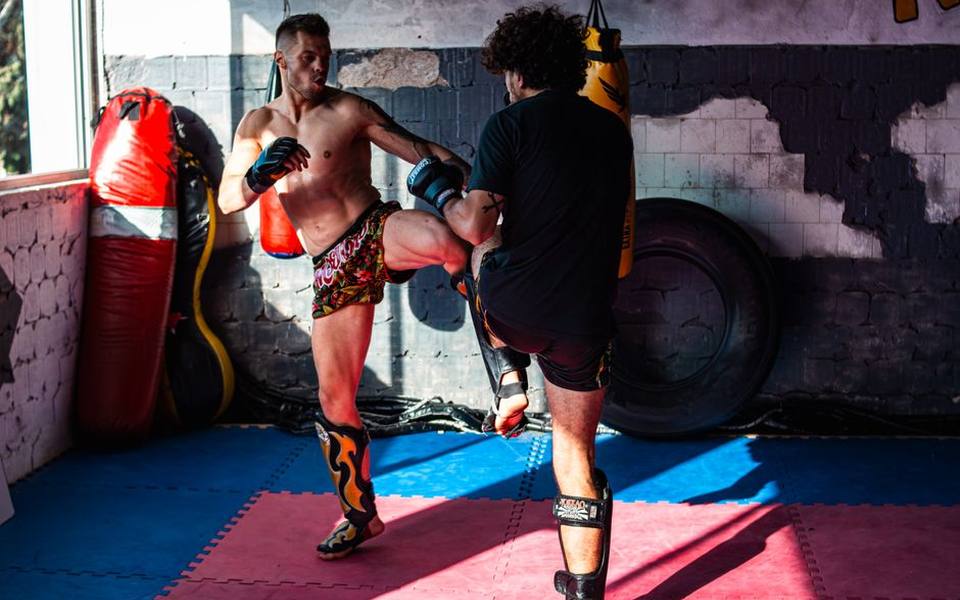
In a dual-curriculum gym, students often transition directly from a forty-five-minute technical pad session into a positional grappling class. This transition demands high physical adaptability, forcing your nervous system to adjust from standing on the balls of your feet in an alert, mobile stance to dropping your base low to stop takedowns and maintain guard. The functional core strength forged during heavy bag rounds translates directly into defensive hip escapes and frame stabilization on the mats.
Cross-training also tempers the wear-and-tear associated with striking sports. While continuous pad impact and rotational kicking place repetitive strain on knees, hips, and shoulders, grappling sessions shift that physical load toward pulling movements, back strength, and joint mobility. Many academies structure their schedules so practitioners can strike two days a week and roll two days a week, maximizing overall combat fitness while providing active recovery between hard striking sessions.
Competitive Sanctioning and Weight Class Breakdown
Practitioners who decide to take their training from gym workouts to organized competition enter a carefully regulated amateur circuit overseen by recognized sanctioning bodies. Organizations like the International Sport Kickboxing Association (ISKA), along with the World Kickboxing Association and national amateur sanctioning commissions, establish standard rule sets to ensure fighter safety. These rule structures govern bout durations, mandatory safety equipment such as headgear and shinguards, and clarify which strikes—such as spinning backfists or low kicks—are legally permitted.
Weight management is fundamental to competitive combat sports, with sanctioning bodies grouping competitors into specific divisions to ensure fair match-ups. In adult divisions, weight classes typically move in incremental brackets, ranging from Flyweight (typically around 112 to 117 pounds) up to Super Heavyweight (often defined as exceeding 215 pounds or more, depending on the sanctioning body's rulebook). Amateur fighters must complete official weigh-ins, either the morning of the tournament or the evening prior, to confirm they meet their declared bracket requirements.
Novice competitors are matched not just by scale weight, but by ring experience. Sanctioning bodies generally separate brackets into novice tiers (often zero to three or five bouts) and open or advanced divisions for seasoned athletes. This separation ensures that an enthusiastic gym member stepping into an amateur smoker or regional bracket does not find themselves squaring off against an athlete with twenty fights and national tournament experience.
Youth Boxing and Striking for Younger Students
Introducing children and teenagers to striking martial arts provides exceptional physical literacy, coordination, and emotional discipline. Modern kids classes are designed from the ground up around safety, replacing the aggressive imagery of professional fighting with structured obstacle courses, target pad holding, and non-contact spatial awareness drills. Younger students learn to control their balance, follow multi-step motor commands, and respect physical boundaries inside the gym.
Coaches working with youth populations place strict guardrails on contact. In a responsible training program, sparring is either non-existent or restricted to touch-contact light sparring using oversized sixteen-ounce gloves and thick headgear under close supervision. Instead of trading blows, children practice reaction games, such as tapping a partner's padded shoulder or evading a foam pool noodle swung by the instructor, which develop defensive head movement without any concussive forces.
Beyond physical fitness, regular striking practice helps young students develop emotional regulation and resilience. The focused exertion required to punch and kick targets channels excess energy productively, while the structured dojo environment reinforces basic social etiquette: shaking hands, listening attentively without speaking out of turn, and helping clean the mats after class. Parents frequently notice improvements in posture, athletic confidence, and concentration at school within a few months of consistent training.
Evaluating Training Facilities Across Regional Hubs
Finding an authentic training home requires looking past cosmetic features like high-end locker rooms and assessing the coaching lineage, safety culture, and class atmosphere. A quality facility always offers an organized layout where students can move between heavy bags and mat space without tripping over gear bags or crowding each other during kicking drills. Cleanliness is a paramount indicator; heavy bags should be regularly disinfected, and mats must be thoroughly mopped with hospital-grade antimicrobial solutions between sessions.
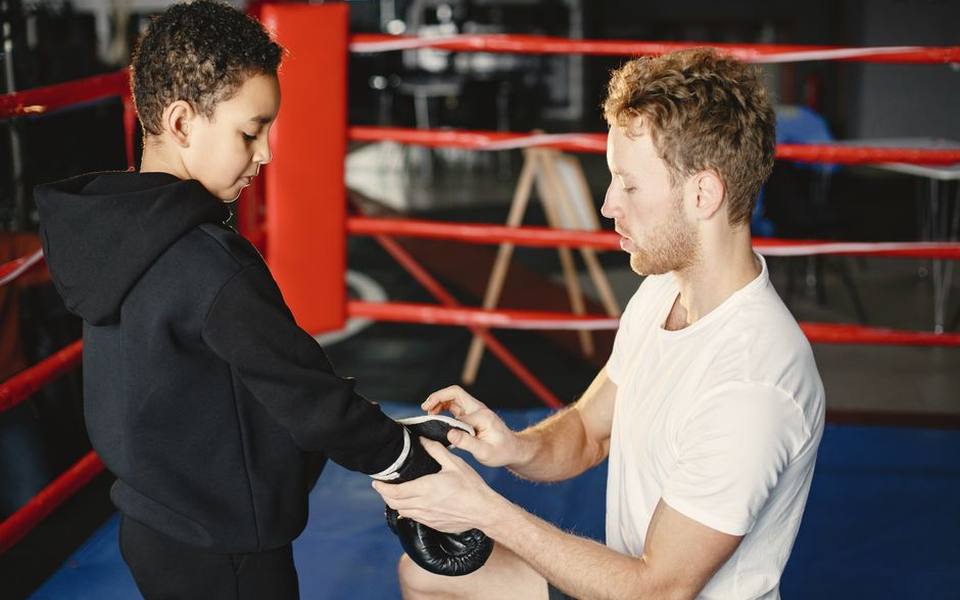
Major coastal hubs feature some of the most competitive training environments in the country. For example, striking students exploring the dense martial arts landscape in California will discover world-renowned academies along the coast, with a prominent hub of boxing and Muay Thai facilities concentrated throughout Southern California and San Diego. These gyms often feature active fight teams training alongside recreational hobbyists, giving new members the advantage of high-level coaching alongside accessible beginner classes.
When touring prospective academies, pay close attention to how coaches treat novice students. A gym that allows advanced fighters to bully newcomers during technical rounds or pushes beginners into sparring before they can hold their hands up is unsafe. Conversely, a good academy will have coaches who actively correct your stance on the heavy bag, encourage patience, and cultivate an ego-free mat culture where every member supports the growth of their peers.
Essential Gear, Hygiene, and Gym Etiquette
Stepping onto the mats requires a baseline investment in personal protective equipment to ensure safety and hygiene. At a minimum, every student needs a quality pair of 180-inch semi-elastic Mexican-style hand wraps to support the twenty-seven small bones of the hand and wrist. For gloves, beginners generally start with standard twelve-to-fourteen-ounce gloves for bag work, but if you plan to drill with partners or spar, most academies mandate sixteen-ounce gloves to soften impact.
If your focus shifts toward Muay Thai or full-contact kickboxing, you will quickly need standup shin guards featuring dense padding over the shin and instep. Unlike thin cloth slip-on guards used in some traditional karate systems, Thai shin guards are thick leather or synthetic shields secured by heavy Velcro straps to absorb bone-on-bone impact. A custom-molded mouthguard and an athletic cup round out the necessary protective gear for any partner contact drills.
Gym hygiene and etiquette are non-negotiable standards across striking arts. Always wipe down personal gear immediately after class, as damp gloves and shin guards left inside an unventilated gym bag become breeding grounds for bacteria and offensive odors. Never walk onto training mats with street shoes, and conversely, never walk barefoot off the mats into the restroom. Simple courtesies like clipping your toenails, wearing freshly washed rash guards, and showing gratitude to your training partners keep the gym clean, safe, and welcoming.
Published 2026-09-21 · reviewed with each rebuild, last September 2026.
Find martial arts schools near you
The directory lists 32,877 martial arts schools by state and city — pick your state or use the “Near me” button in the header.
More guides
-
 Owning
Establishing a Proper Heavy Bag Routine and Striking Technique at Home
-
 Safety
Brazilian Jiu-Jitsu for Beginners: Tips, Fundamentals, and Mat Health
-
 Buying
Finding the Right Fit: A Guide to Sizing Your Jiu-Jitsu Uniform and Cross-Training Gear
-
 Money
MoneyHow Much Do Martial Arts Classes Cost? Membership Fees Breakdown
-
 Owning
What Is Mixed Martial Arts? Beginner Overview and Training Guide
-
 Owning
The History, Origins, and Physical Demands of Brazilian Jiu-Jitsu
-
 Owning
Traditional Martial Arts Guide: Understanding Wushu, Silat, and Naginata
-
 Owning
Understanding Mixed Martial Arts for Beginners
-
 Safety
How to Wrap Your Hands for Boxing: Step-by-Step Wrist and Knuckle Protection Guide
-
 Buying
Best Jiu-Jitsu Gis and Apparel: Complete Buyer's Guide and Sizing Chart
-
 Buying
BJJ vs Judo vs Wrestling vs No-Gi: Which Grappling Art Is Right for You?
-
 Buying
How to Choose the Best Jiu-Jitsu and MMA Gym Near You
-
 Owning
Brazilian Jiu-Jitsu for Beginners: Rules, Belt Ranks, and Mat Training
-
 Buying
Kickboxing Classes & Cardio Fitness Workouts Guide
-
 Owning
Martial Arts Belt Ranking Systems: Progression, Orders, and Displays
-
 Buying
Jeet Kune Do: History, Philosophy, and Modern Training Guide
-
 Buying
BJJ Gis and Uniforms Buyer's Guide: Brands, Fit, and Care
-
 Buying
Gracie Jiu-Jitsu Lineages, Academy Networks, and Training Philosophies
-
 Buying
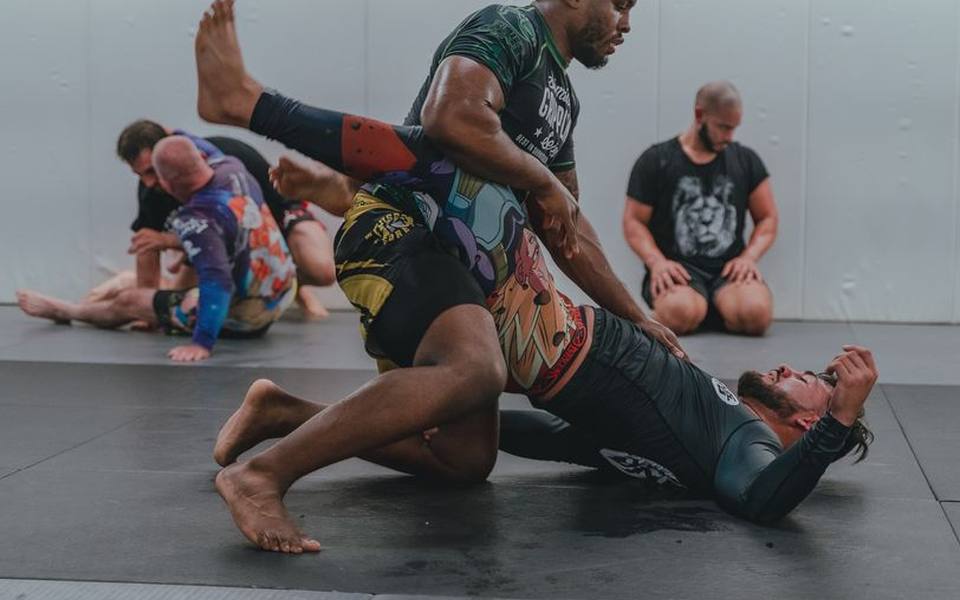
10th Planet Jiu-Jitsu: Complete Guide to the No-Gi System and Academies
-
 Safety
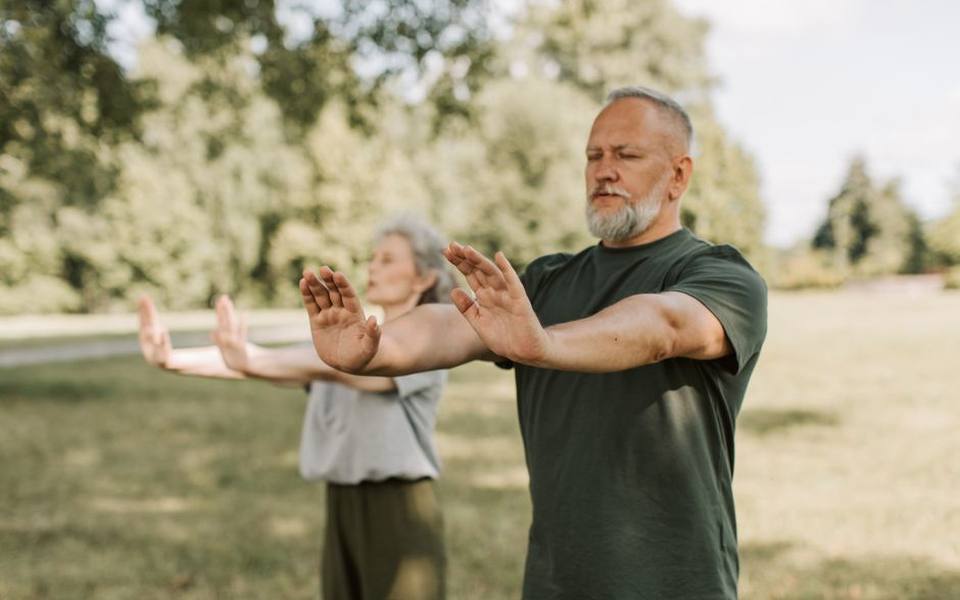
Tai Chi Classes for Seniors: Health Benefits, Styles, and Practice Guide
-
 Owning
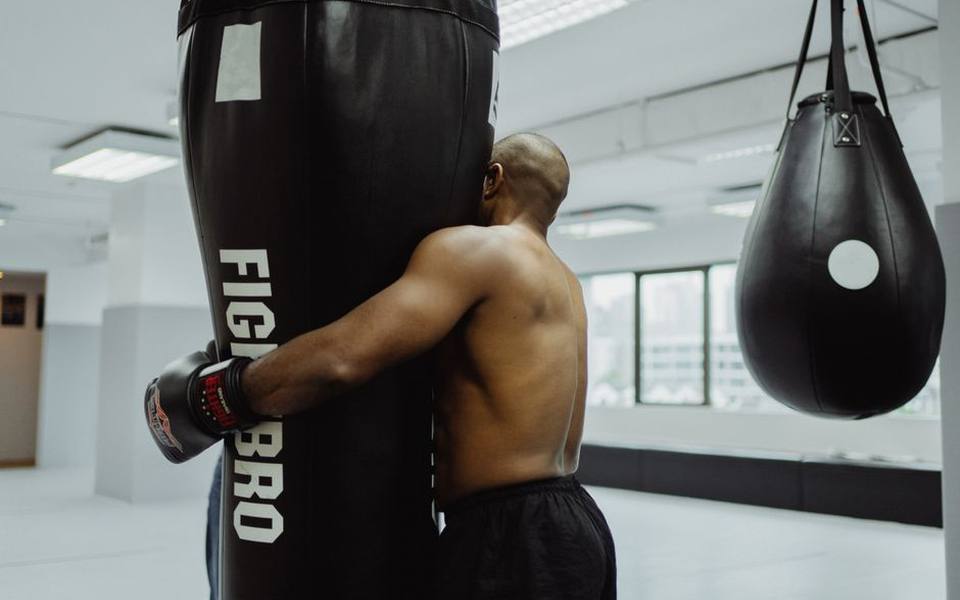
Heavy Bag and Boxing Workouts: Home Setup, Gear Selection, and Training Guide
-
 Buying
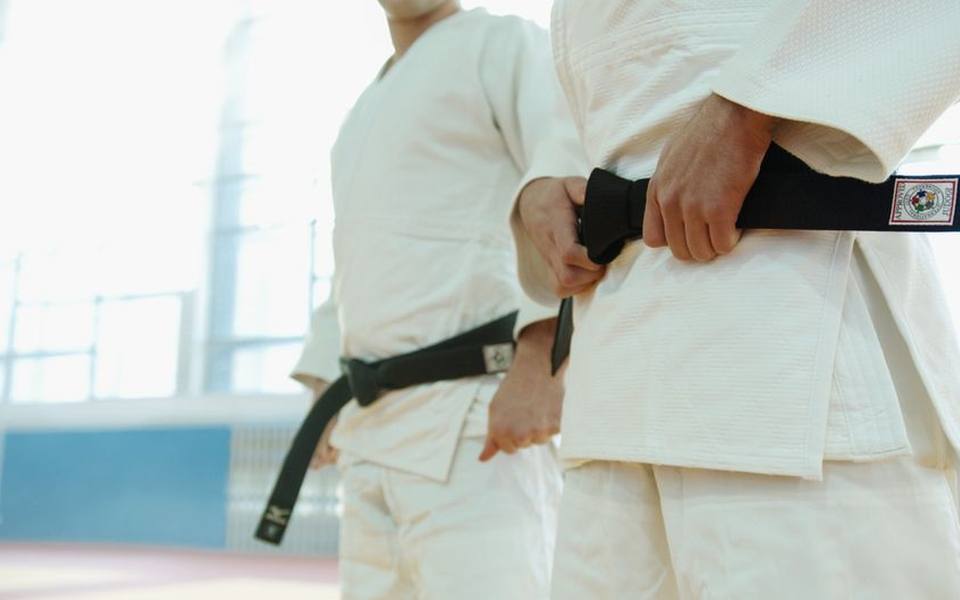
Adult Karate and Taekwondo Classes: Getting Started and Gi Sizing
-
 Owning
IBJJF Tournaments and Competition Guide: Databases, Rules, and Events
-
 Safety
Custom vs. Boil-and-Bite Mouthguards: Complete Selection and Fitting Guide
-
 Safety
Women's and Adult Self-Defense Training Guide: Techniques, Classes, and Systems
-
 Owning
Traditional Chinese Martial Arts: Shaolin, Wing Chun, Jeet Kune Do, and Gear Guide
-
 Buying
Adult Martial Arts Guide: Choosing the Right Style, Gym, and Training Class
-
 Buying
Filipino Martial Arts, Kenpo, Aikido, and HEMA: Comparing Traditional Combat Styles
-
 Owning
Heavy Bag Workout Guide: Routines, Drills, and Training for Cardio and Weight Loss
-
 Buying
BJJ Gis, Rash Guards, and Apparel: How to Choose, Size, and Care for Jiu-Jitsu Gear
-
 Safety
Women's and Adult Self-Defense Classes: Selecting Programs for Real-World Safety
-
 Owning
Martial Arts Belts and Ranks: Belt Order, Taping, and Display Racks Guide
-
 Safety
Martial Arts Conditioning, High-Kick Mobility, and Protective Gear Guide
-
 Buying
Kids and Toddler Martial Arts: Complete Guide to Classes, Camps, and Family Dojos
-
 Owning
How to Hang a Heavy Bag: Ceiling and Wall Mounting Installation Guide
-
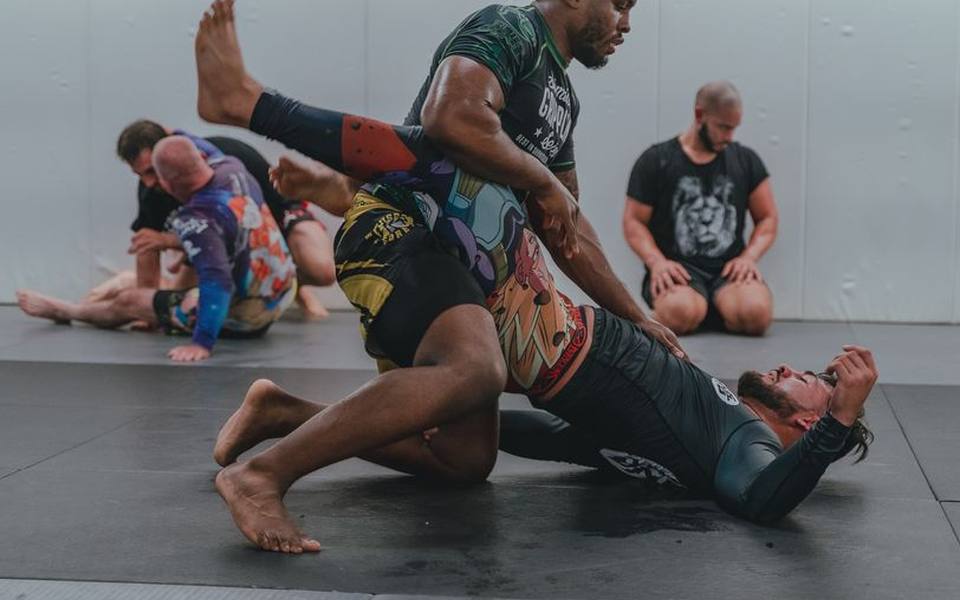 Buying
Brazilian Jiu-Jitsu Schools, Academies, and Lineages: A Complete Guide
-
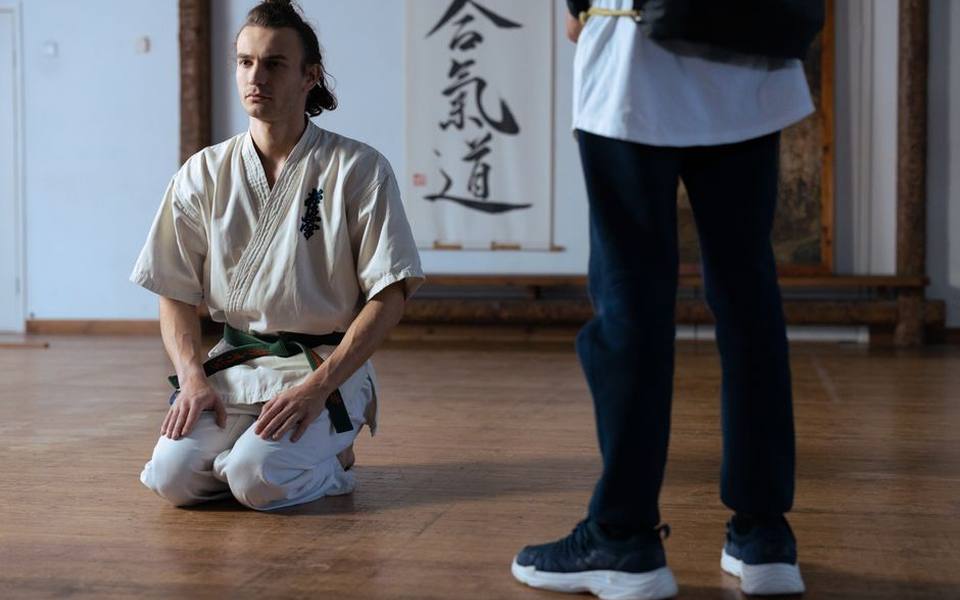 Buying
Martial Arts Gyms, Fitness Studios, and Dojos Directory Guide
-
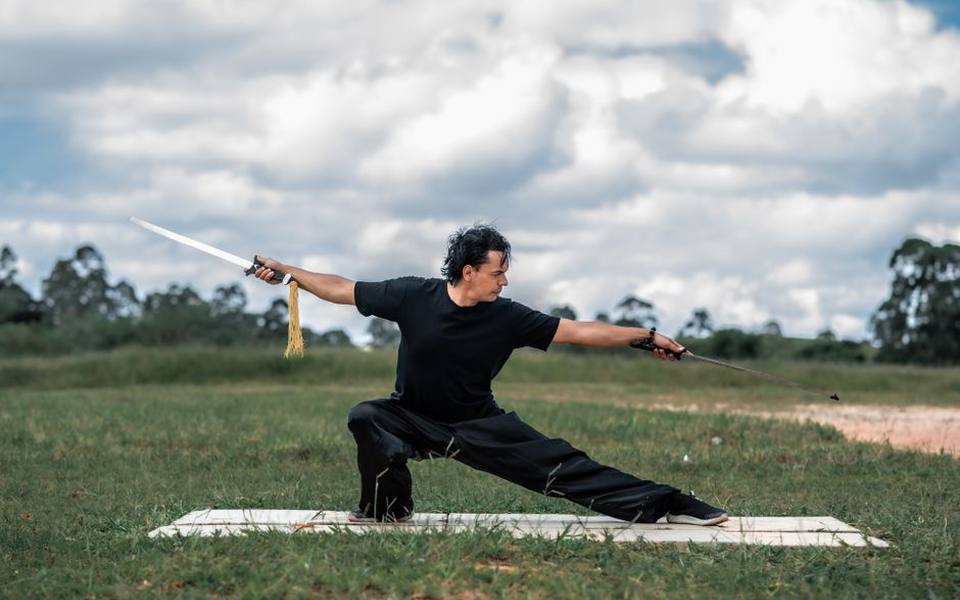 Buying
Traditional Martial Arts Styles and Specialized Disciplines Guide
-
 Owning
BJJ and Martial Arts Gi Selection, Sizing, and Equipment Care Guide