Understanding Martial Arts Belt Progression and Purpose
Martial arts belt ranking systems exist to organize a student's technical progression, benchmark skill milestones, and provide a clear curriculum roadmap from novice to master. While early Eastern combat arts originally had no colored belt hierarchy, modern systems rely on colored belts to separate fundamental mechanics from advanced application. Progression is universally tied to time on the mat, mechanical competence, and character development rather than mere class attendance.
The modern hierarchy traces back to Judo founder Jigoro Kano in the late nineteenth century, who adopted white and black sashes before introducing colored belts in the early twentieth century. This visual model spread rapidly across Japanese and Okinawan disciplines, establishing a framework that Western academies still depend on today. In traditional martial arts, the progression almost universally shifts from light colors toward darker shades, symbolizing the accumulation of sweat, dust, and experience over years of relentless practice.
Most formal arts split their ranking structure into two overarching tiers: student ranks and advanced master ranks. Japanese and Okinawan arts describe student grades as Kyu and black belt levels as Dan. Korean arts use Geup and Dan, while Brazilian grappling arts use colored bands with interim tape stripes. Understanding where your school's curriculum falls within these structures helps demystify the timeline and keeps expectations grounded during lengthy training plateaus.
The Karate Belt Order from Novice to Dan Ranks
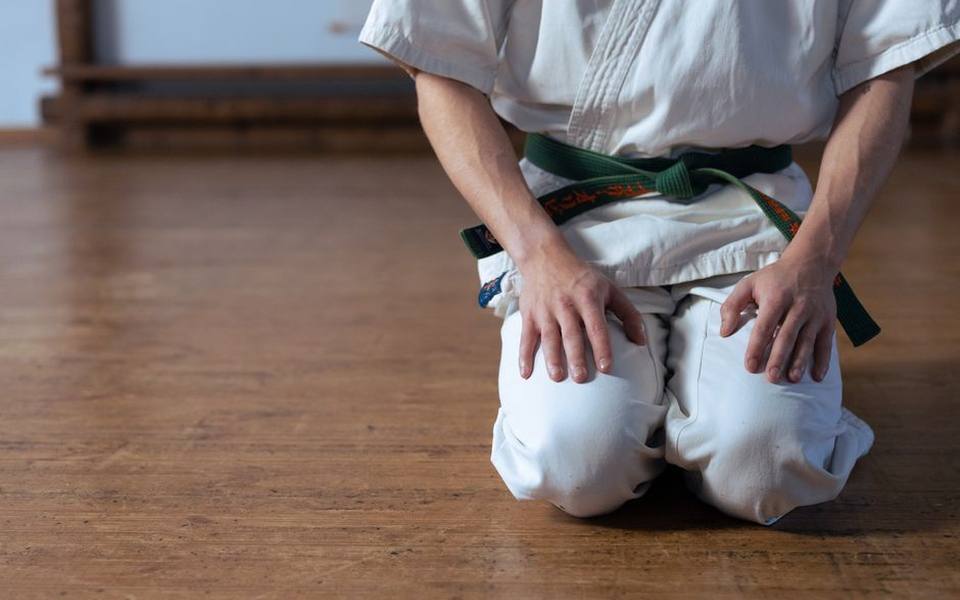
The standard karate belt order begins with the white belt, representing an empty cup ready to receive foundational knowledge. While exact colors can vary slightly depending on the specific lineage, a very common sequence moves from white to yellow, orange, green, blue, purple, brown, and finally black. Each tier introduces specific stances, strikes, blocks, and kata forms that build directly upon the mechanical lessons learned in the preceding color grade.
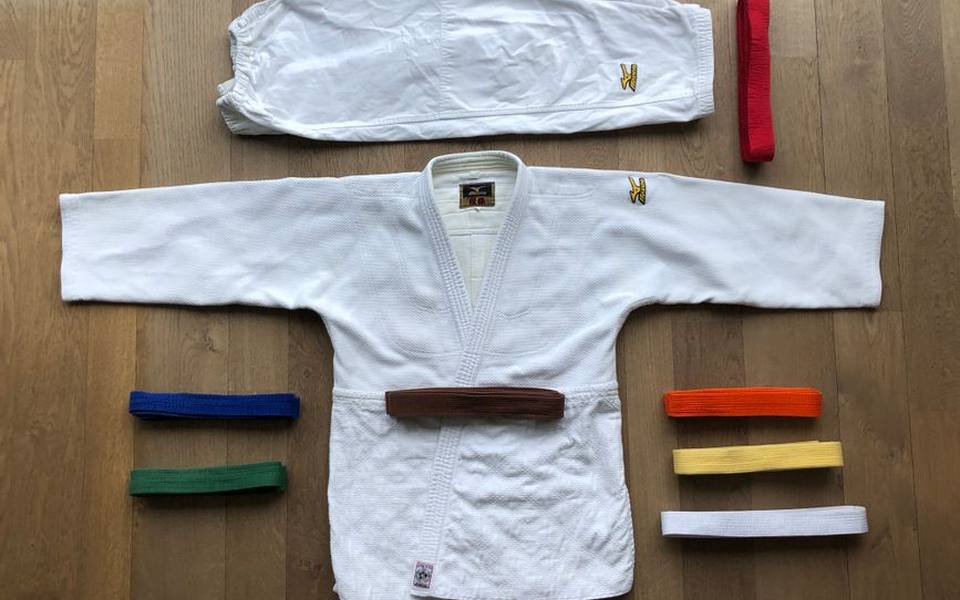
In most traditional karate dojos, student ranks are numbered in descending order, starting around the tenth or eighth Kyu for novices and working down to the first Kyu at advanced brown belt. Yellow and orange belts focus heavily on body alignment, basic balance, and chambering strikes properly. By the time a student reaches intermediate green and blue belts, training shifts toward continuous combinations, dynamic footwork, and introductory partner sparring drills.
Brown belt represents the final preparatory gateway before reaching the coveted black belt rank. Typically spanning two to three distinct sub-levels or stripes, brown belt demands sharp technical precision, comprehensive kata bunkai understanding, and tactical poise under sparring pressure. Reaching the first-degree black belt, or Shodan, is widely misunderstood as mastering the art; in reality, it signifies that the student has mastered the basics and is now ready to begin serious study.
Style Variations and Grading Systems in Karate Do
Across the broader spectrum of karate do belt ranking paths, distinct lineages like Shotokan, Goju-Ryu, Wado-Ryu, and Kyokushin implement their own color variations. For example, some organizations position purple before blue, while others bypass purple entirely in favor of multiple green and brown ranks. These variations reflect organizational choices rather than differences in fighting effectiveness, as each style simply segments its curriculum according to its own teaching philosophy.
Kyokushin karate uses an intense grading model where belt promotions require rigorous physical conditioning and full-contact knockdown sparring alongside technical tests. In contrast, classical Okinawan lineages often emphasize circular close-quarters trapping, conditioning with traditional stone implements, and deep anatomical study of forms before awarding upper Kyu grades. Finding traditional martial arts schools that clearly outline their rank requirements prevents confusion regarding what is expected at each testing milestone.
Belt testing intervals in karate typically run between three and six months for early ranks, extending to six to twelve months between upper Kyu levels. Advancement relies on formal testing boards where instructors evaluate stance integrity, power generation, breathing control, and formal syllabus compliance. Unlike casual progression systems, legitimate traditional dojos require candidates to demonstrate mental composure when pushed to physical exhaustion during their grading examinations.
The Brazilian Jiu-Jitsu Belt Hierarchy and Standards
The Brazilian Jiu-Jitsu belt hierarchy is widely recognized as one of the most demanding and time-intensive promotion ladders in martial arts. Unlike striking arts that utilize seven to ten distinct colored belts, adult BJJ relies on just five core ranks: white, blue, purple, brown, and black. Because promotions depend on live sparring effectiveness against resisting partners rather than solo forms, earning any promotion in the BJJ rank system represents a major athletic milestone.
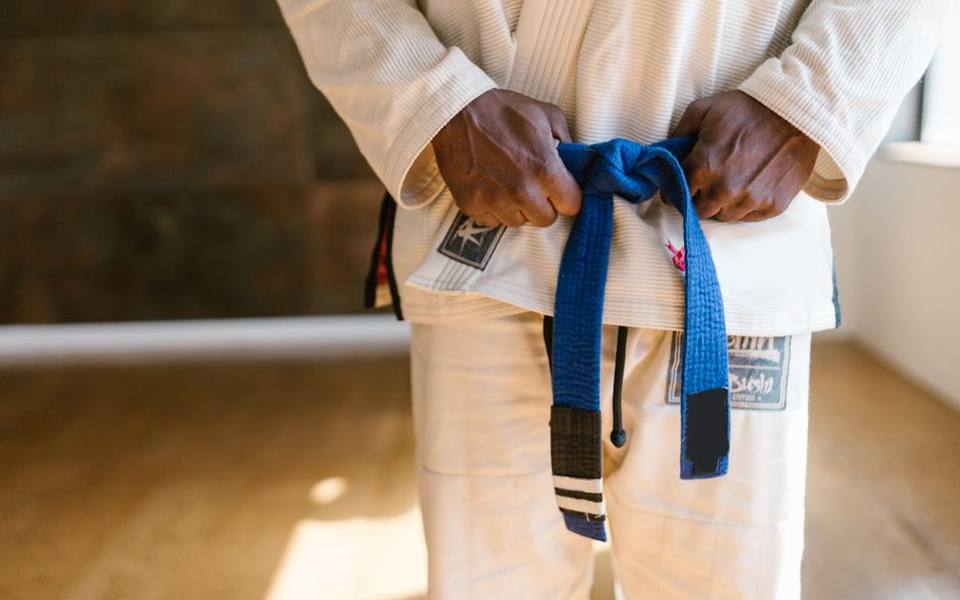
A practitioner begins as a white belt, learning basic survival, defensive posture, and escape mechanics from inferior positions. Blue belt is awarded when a student demonstrates competent defense and a reliable submission repertoire against newer grapplers, typically requiring two to three years of steady training. Purple belt introduces refined technical flow and individual game development, brown belt hones positional efficiency, and black belt reflects deep mechanical literacy across every grappling situation.
Prospective grapplers searching for dedicated Brazilian Jiu-Jitsu schools will find that earning a black belt typically takes between eight and twelve years of regular commitment. Time frames vary greatly depending on training frequency, natural athletic ability, and tournament participation, but there are virtually no shortcuts in reputable gyms. Live rolling serves as an unfiltered truth test, ensuring that rank closely mirrors real-time grappling efficacy on the mats.
BJJ Stripes, Time Standards, and Mat Promotion Culture
To recognize incremental progress along the multi-year intervals between major ranks, BJJ academies use athletic tape stripes on the belt's black sleeve bar. Most ranks feature four stripes before a student becomes eligible for the next colored belt, though instructors promote at their own discretion rather than following a strict mathematical calendar. Stripes serve as small motivational checkpoints, signaling to training partners that a student is refining their technical depth and positional awareness.
Unlike many standing arts that hold structured quarterly tests with set choreography, promotions in jiu-jitsu training frequently happen during open seminars, belt ceremonies, or organically after intense sparring sessions. Instructors evaluate how well you execute sweeps, control dominant positions, escape bad spots, and maintain composure under physical pressure. An instructor will rarely promote someone based on memorization alone; live application against resisting peers remains the ultimate grading metric.
Mat culture also includes traditional promotion rituals, ranging from celebratory promotion gauntlets to prolonged sparring rounds against the academy's senior ranks. While some modern gyms have phased out aggressive hazing practices in favor of supportive communal rolling sessions, the transition from one belt to the next remains an emotional milestone. Practitioners wear their weathered belts with quiet pride, as each promotion represents hundreds of hours spent wrestling against stubborn resistance.
Youth Belts vs. Adult Progression Frameworks
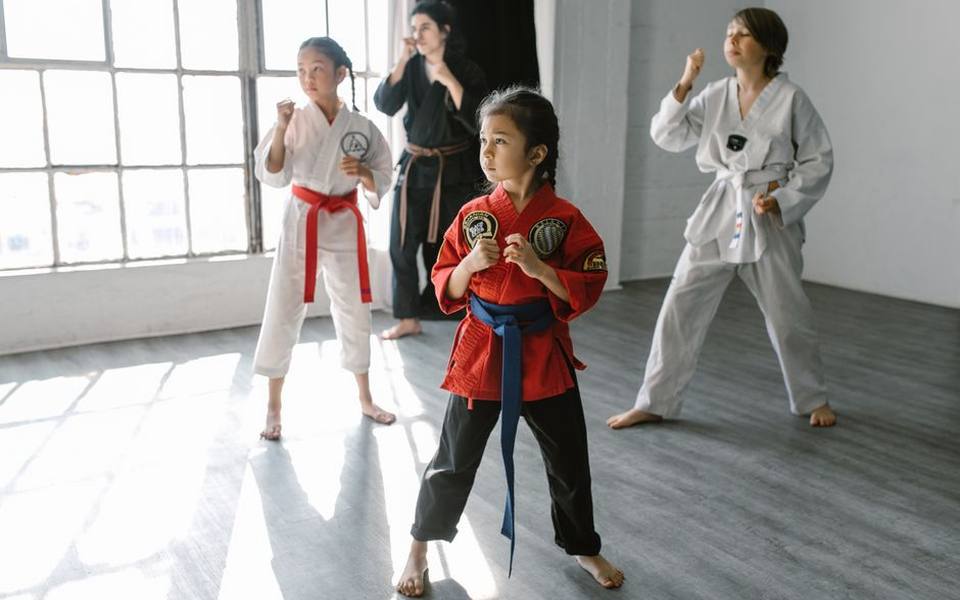
Young practitioners follow distinct ranking ladders designed to offer more frequent reinforcement while preserving the integrity of adult black belts. In striking systems like karate and Taekwondo, dojos often insert intermediate stripes, colored tips, or half-and-half belts to keep children motivated over long learning arcs. Reputable kids martial arts classes balance technical retention with age-appropriate milestones, ensuring children stay engaged without diluting standard curriculum requirements.
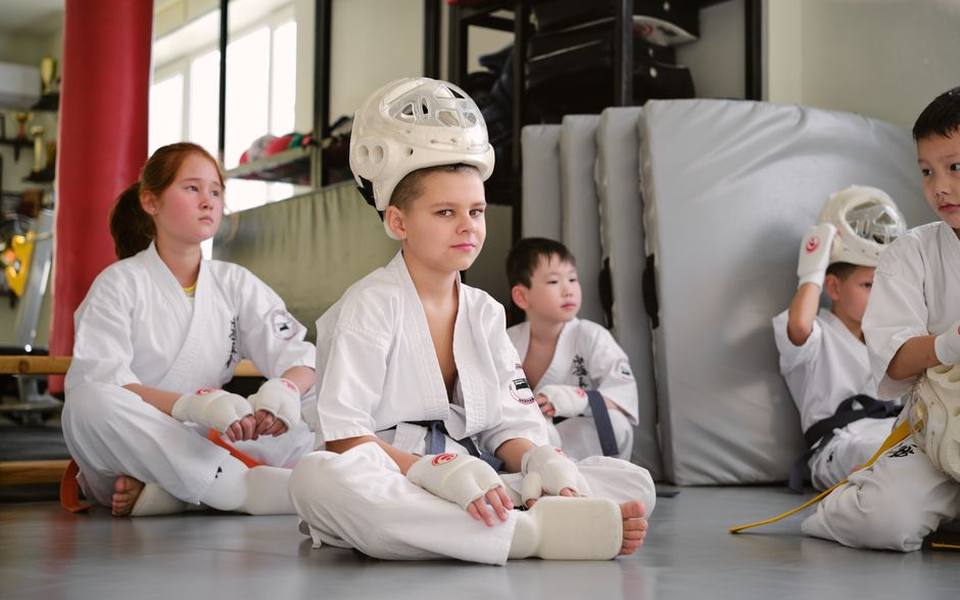
In Brazilian Jiu-Jitsu, the youth ranking system diverges entirely from the adult ladder to protect young bodies and provide structured development. Children under sixteen progress through white, grey, yellow, orange, and green belts, each containing four interim stripes. A youth practitioner cannot receive a blue belt until they reach age sixteen, preventing minors from competing in adult divisions where strength disparities and joint submissions pose serious physical risks.
Many karate systems award a junior black belt to students under age sixteen who complete the standard syllabus. This designation acknowledges juvenile mastery of techniques and forms without granting full adult teaching or ranking status. Once the student reaches early adulthood, they must generally re-test under adult sparring conditions and physical stamina requirements to validate their rank as a full Shodan within the adult registry.
Taekwondo Geup Orders and Grading Systems
Taekwondo operates on an organized progression framework centered around Geup ranks for color belts and Dan ranks for black belts. In major federations such as World Taekwondo or the International Taekwon-Do Federation, students begin at tenth or ninth Geup and advance downward toward first Geup. The color palette commonly moves from white through yellow, green, blue, and red before reaching candidate black belt status.
Each Taekwondo rank centers on specific patterns, known as Poomsae or Tul, which teach rotational power, kicking precision, and balance. In addition to pattern memorization, Geup grading tests routinely incorporate dynamic board breaking, target drills, step-sparring routines, and Olympic or continuous light-contact sparring. The emphasis on high, fast kicks requires candidates to demonstrate significant flexibility, core stability, and hip mobility at each successive rank evaluation.
Testing timelines in Taekwondo are typically more standardized than in grappling arts, often allowing dedicated students to test every two to four months in the early grades. Reaching a first Dan black belt typically takes three to five years of consistent training. However, obtaining a black belt in Taekwondo represents the mastery of fundamental kicking mechanics, serving as the baseline for deeper martial development rather than the finish line.
Grading Criteria, Belt Fees, and Testing Standards
Martial arts grading criteria assess a balance of technical execution, tactical fluency, attendance records, and personal conduct. For beginner ranks, instructors evaluate whether a student chambers kicks correctly, pivots on the support foot, and remembers prescribed basic combinations. As ranks advance, expectations shift from mechanical replication toward tactical timing, dynamic sparring composure, and the ability to explain the practical application of traditional techniques.
Belt testing fees are common across martial arts academies, but they should always remain transparent and reasonable. In most regions, basic color belt tests range from modest administrative fees to moderate sums that cover certificates, official federation registrations, and new belts. If an academy charges exorbitant testing fees or guarantees promotions strictly on payment rather than merit, students should approach with caution and assess the school's instructional integrity.
Physical conditioning and mental resilience form an unwritten element of every rigorous belt examination. Instructors deliberately push testing candidates to exhaustion through extended calisthenics, repeated forms, and back-to-back sparring rounds to evaluate how they behave under severe fatigue. Maintaining composure, showing respect to training partners, and refusing to quit when physically drained demonstrate the true character traits that colored belts are meant to symbolize.
Storing, Caring for, and Displaying Martial Arts Belts
Over years of dedicated training, practitioners accumulate a collection of colored belts that represent their personal journey through the martial arts. Preserving these belts requires proper storage and care to prevent fabric deterioration and fading. While some practitioners prefer keeping their old belts neatly rolled in their gym bags or closets, dedicated displays offer an inspiring visual timeline of long-term athletic and personal development inside a home or office.
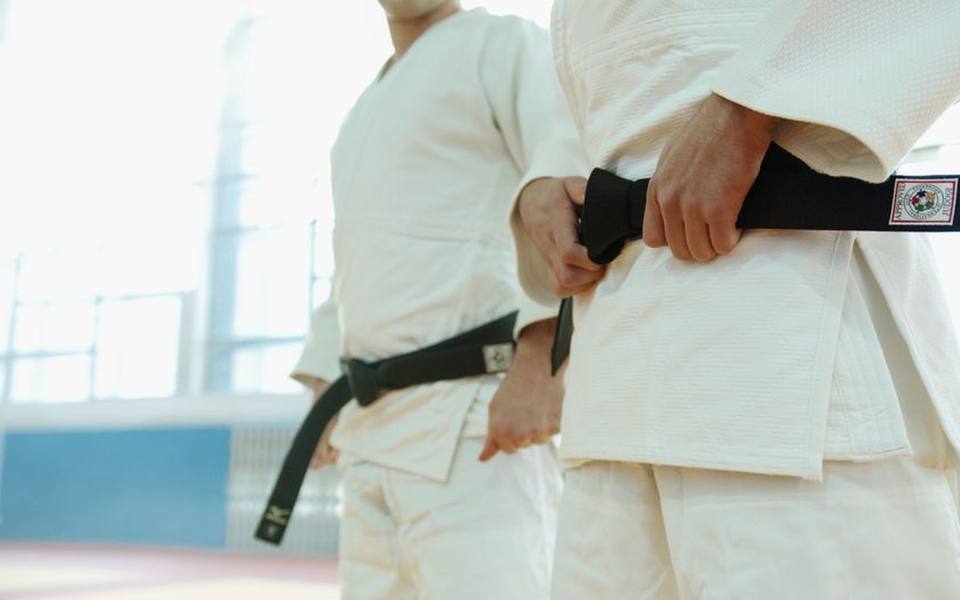
Popular belt display solutions include wooden hanging slat racks, acrylic cylinder tubes, and custom wall-mounted shadow boxes. Slat displays allow you to fold each belt horizontally and secure it with elastic bands, showcasing progression in a vertical column from white to black. Shadow boxes offer added protection from dust and UV light, providing room to pin promotion certificates, tournament medals, and testing photos alongside your rank belts.
A persistent tradition in many traditional dojos claims that martial arts belts should never be washed, under the folklore that washing washes away your accumulated knowledge and spirit. In modern training environments, hygiene should always take precedence over superstition. If your belt becomes sweat-soaked, bacteria-laden, or dirty from mat contact, gentle hand-washing with mild detergent and air-drying preserves the fabric without compromising its structural integrity or the belt's symbolic value.
Moving Between Styles and Starting Over at White Belt
One of the most humbling experiences in martial arts is earning a high rank in one discipline and later stepping onto the mats of another as a beginner. An advanced karate black belt who walks into a jiu-jitsu academy will inevitably tie a white belt around their waist once again. While striking mechanics, distance management, and physical discipline carry over, every martial art possesses unique biomechanics that require clean slate learning.
Instructors universally respect cross-training practitioners who wear their white belts without ego or entitlement. Rather than expecting expedited promotions, experienced martial artists view the novice stage of a new art as an opportunity to rebuild their foundations from scratch. Academies across regions like California martial arts dojos frequently see multi-discipline practitioners blending striking and grappling to develop a more rounded combat perspective.
Ultimately, belt ranking systems serve as personal compasses rather than absolute measures of human worth or self-defense dominance. A belt merely holds a uniform together; the actual martial art lives in your reflexes, muscle memory, and quiet humility under pressure. Focusing on consistent daily training, technical curiosity, and respectful engagement with your training partners will always yield far greater long-term rewards than chasing the next colored cloth.
Published 2026-09-21 · reviewed with each rebuild, last September 2026.
Find martial arts schools near you
The directory lists 32,877 martial arts schools by state and city — pick your state or use the “Near me” button in the header.
More guides
-
 Owning
Establishing a Proper Heavy Bag Routine and Striking Technique at Home
-
 Safety
Brazilian Jiu-Jitsu for Beginners: Tips, Fundamentals, and Mat Health
-
 Buying
Finding the Right Fit: A Guide to Sizing Your Jiu-Jitsu Uniform and Cross-Training Gear
-
 Money
MoneyHow Much Do Martial Arts Classes Cost? Membership Fees Breakdown
-
 Owning
What Is Mixed Martial Arts? Beginner Overview and Training Guide
-
 Owning
The History, Origins, and Physical Demands of Brazilian Jiu-Jitsu
-
 Owning
Traditional Martial Arts Guide: Understanding Wushu, Silat, and Naginata
-
 Owning
Understanding Mixed Martial Arts for Beginners
-
 Safety
How to Wrap Your Hands for Boxing: Step-by-Step Wrist and Knuckle Protection Guide
-
 Buying
Best Jiu-Jitsu Gis and Apparel: Complete Buyer's Guide and Sizing Chart
-
 Buying
BJJ vs Judo vs Wrestling vs No-Gi: Which Grappling Art Is Right for You?
-
 Buying
How to Choose the Best Jiu-Jitsu and MMA Gym Near You
-
 Owning
Brazilian Jiu-Jitsu for Beginners: Rules, Belt Ranks, and Mat Training
-
 Buying
Kickboxing Classes & Cardio Fitness Workouts Guide
-
 Buying
Jeet Kune Do: History, Philosophy, and Modern Training Guide
-
 Buying
BJJ Gis and Uniforms Buyer's Guide: Brands, Fit, and Care
-
 Buying
Gracie Jiu-Jitsu Lineages, Academy Networks, and Training Philosophies
-
 Buying
10th Planet Jiu-Jitsu: Complete Guide to the No-Gi System and Academies
-
 Safety
Tai Chi Classes for Seniors: Health Benefits, Styles, and Practice Guide
-
 Owning
Heavy Bag and Boxing Workouts: Home Setup, Gear Selection, and Training Guide
-
 Buying
Adult Karate and Taekwondo Classes: Getting Started and Gi Sizing
-
 Owning
IBJJF Tournaments and Competition Guide: Databases, Rules, and Events
-
 Safety
Custom vs. Boil-and-Bite Mouthguards: Complete Selection and Fitting Guide
-
 Safety
Women's and Adult Self-Defense Training Guide: Techniques, Classes, and Systems
-
 Owning
Traditional Chinese Martial Arts: Shaolin, Wing Chun, Jeet Kune Do, and Gear Guide
-
 Buying
Adult Martial Arts Guide: Choosing the Right Style, Gym, and Training Class
-
 Buying
Filipino Martial Arts, Kenpo, Aikido, and HEMA: Comparing Traditional Combat Styles
-
 Owning
Heavy Bag Workout Guide: Routines, Drills, and Training for Cardio and Weight Loss
-
 Buying
Muay Thai and Cardio Kickboxing Classes: Training, Techniques, and Fitness Programs
-
 Buying
BJJ Gis, Rash Guards, and Apparel: How to Choose, Size, and Care for Jiu-Jitsu Gear
-
 Safety
Women's and Adult Self-Defense Classes: Selecting Programs for Real-World Safety
-
 Owning
Martial Arts Belts and Ranks: Belt Order, Taping, and Display Racks Guide
-
 Safety
Martial Arts Conditioning, High-Kick Mobility, and Protective Gear Guide
-
 Buying
Kids and Toddler Martial Arts: Complete Guide to Classes, Camps, and Family Dojos
-
 Owning
How to Hang a Heavy Bag: Ceiling and Wall Mounting Installation Guide
-
 Buying
Brazilian Jiu-Jitsu Schools, Academies, and Lineages: A Complete Guide
-
 Buying
Martial Arts Gyms, Fitness Studios, and Dojos Directory Guide
-
 Buying
Traditional Martial Arts Styles and Specialized Disciplines Guide
-
 Owning
BJJ and Martial Arts Gi Selection, Sizing, and Equipment Care Guide