The Foundation of Martial Arts Conditioning and Joint Protection
Martial arts progression depends on physical preparation and gear selection just as much as hours logged on the mats. Many beginners dive straight into intense sparring without conditioning the small stabilizing muscle groups or investing in proper padding. Over time, neglected hip flexibility halts striking development, while an unprepared neck leaves grapplers vulnerable to routine takedowns. Addressing these training gaps early safeguards your joints and lets you train consistently week after week.
Striking arts require an uncommon blend of active mobility and protective equipment. When throwing roundhouse kicks, your hips, hamstrings, and thoracic spine work in unison to produce power without compromising balance. At the same time, striking dense bags or trading leg kicks with partners demands gear designed specifically for repeated impact. Whether you are browsing local kickboxing classes or working toward a black belt, balancing mobility drills with sensible protective equipment is essential.
Grapplers face a distinct set of physical requirements where cervical spine endurance dictates safety during scuffles and sprawling exchanges. A resilient neck dampens rotational forces during collisions and prevents chronic strain from guillotines or collar ties. Paired with reliable shin protection and dense bag mitts, a structured conditioning regimen eliminates avoidable training downtime. Developing these physical attributes takes patience, disciplined progression, and the right gear suited to your particular discipline and body frame.
Dynamic Hip Mobility and Stretches for Kicking Higher
Reaching the ribs or head with clean strikes starts with hip mobility rather than passive flexibility. Many practitioners try to force higher kicks by simply pulling their legs toward their chests or holding splits cold, which often irritates the hip flexors and groin. Effective stretches for kicking higher emphasize dynamic movement that lubricates the acetabulofemoral joint while progressively loosening the adductors and hamstrings. Warming up through full ranges of motion prepares your connective tissues for high-velocity ballistic actions.
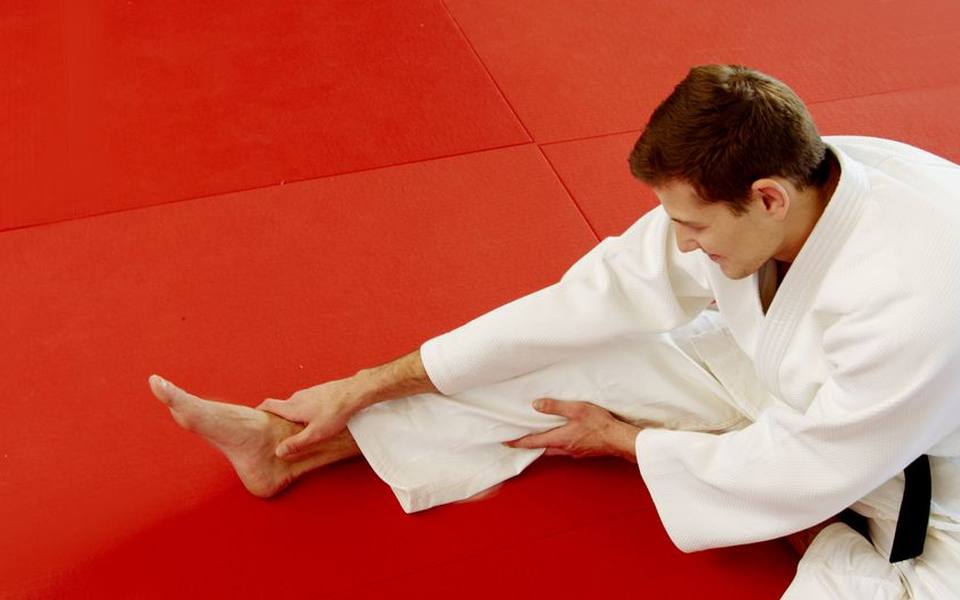
Leg swings remain the cornerstone of any pre-striking warm-up routine. Perform controlled sagittal swings, bringing the leg straight up in front with a dorsiflexed foot, followed immediately by frontal plane swings across the torso. These kick higher stretches raise tissue temperature while teaching your nervous system to tolerate length under momentum. Aim for two to three sets of ten to fifteen repetitions per side, keeping your torso upright and your supporting heel firmly grounded to avoid lumbar compensation.
The lateral hip opening is equally critical for chambering clean round kicks and side kicks. Cossack squats and low traveling lunges force the hips into deep lateral abduction under load, lengthening the inner thighs while building end-range knee and ankle stability. Transitioning slowly from side to side without standing up entirely between reps teaches the hip capsules to open comfortably, laying the physical groundwork required before you start practicing explosive strikes against pads.
Structured Stretching Routines Inspired by Taekwondo Training
Taekwondo stylists are renowned for delivering head-height axe kicks and spinning heels with pinpoint precision. The foundation behind this range is a systematic approach to lower-body elasticity that blends static stretches with proprioceptive neuromuscular facilitation, commonly known as PNF. Incorporating dedicated stretching exercises for taekwondo into your post-session cooldown resets muscle resting length and gradually expands the absolute range of motion of your hamstrings, hips, and lower back after demanding training sessions.
PNF techniques, particularly the contract-relax method, yield faster flexibility improvements than static passive stretching alone. To execute this for the hamstrings, lie on your back, raise one leg with a strap or resistance band to the threshold of mild tension, and push against the band at roughly forty percent effort for five to seven seconds. Upon releasing the contraction, gently draw the limb slightly deeper into the stretch for twenty seconds. Repeat this sequence three times per limb.
Floor-based stretches for taekwondo also demand attention to the adductors and hip rotators. The frog stretch, where you widen your knees on a mat and sink your hips toward your heels, targets deep groin tissues often missed by conventional standing toe-touches. Follow this with seated straddle holds, keeping your kneecaps pointed toward the ceiling to protect lateral knee ligaments. Consistent application over several months will steadily release the tightest areas restricting your kicking arc.
Unlocking Active Flexibility and Stability for Head Kicks
Being able to touch your toes or slide into a passive split does not automatically translate into head-level kicking power. Static flexibility merely establishes how far your joints can move when an external force pulls them, whereas striking demands active flexibility: the capacity to lift and hold the leg high using your own muscular contractions. Developing dependable stretching exercises for high kicks means coupling joint opening work with targeted strengthening of the gluteus medius, hip abductors, and deep core.
Wall-assisted chamber holds bridge the divide between passive range and striking control. Stand perpendicular to a wall with one hand for light support, lift your kicking leg into a chambered roundhouse position at waist height, and slowly extend the kick outward. Hold the fully locked leg parallel to the floor for five seconds before chambering and setting it down. As your abductor strength develops, elevate the holding position toward shoulder height to train the stabilizers needed for high kicks.
Another vital factor is pelvic tilt during the execution of high kicks. Many students get stuck at shoulder level because they keep their pelvis tucked, which jams the femoral neck into the hip socket. Turning your supporting foot roughly one hundred and eighty degrees away from the target naturally opens the pelvis, clearing anatomical room for the femur to swing upward. Integrating this mechanical adjustment with your stretching for high kicks immediately yields several inches of additional clean reach.
Neck Conditioning for Grappling and Collision Resilience
Grappling arts and stand-up combat place massive biomechanical demands on the cervical spine. During scrambles, takedown defenses, or front headlocks, your neck acts as a shock absorber protecting your spinal cord and brain from sudden acceleration forces. Implementing a deliberate wrestler neck workout helps build a dense muscular collar around the cervical vertebrae. This protective tissue helps disperse blunt forces and significantly decreases the risk of whiplash, cervical disc trauma, and concussion in heavy contact sports.

A sensible neck strengthening regimen begins with isometric holds before introducing any movement through dynamic planes. Lie on your back, tuck your chin slightly toward your sternum, and press your forehead against the palm of your hand, exerting moderate pressure without letting your head move. Hold for ten seconds, then repeat against the back of your head and both temples. This four-way isometric drill stimulates deep cervical flexors without placing sheer force on delicate intervertebral discs.
As your structural baseline develops, you can introduce controlled movement patterns on the mat. Prone neck extensions on your elbows and supine nod progressions help build endurance across long sparring rounds in mixed martial arts programs. Always prioritize slow tempos and high repetitions over maximal straining. Because the cervical spine houses vulnerable nerve roots, your neck exercises for wrestling must emphasize technical precision and deliberate tension rather than aggressive loading or sudden jerky movements.
Advanced Resistance Methods and Bridging Protocols
Traditional bridging on the crown of the head has long been a staple in high school and collegiate wrestling rooms, but it requires cautious progression. Full rotational neck bridges place substantial axial loads on unconditioned cervical vertebrae, which can lead to premature joint wear. Beginners should always begin with hands-supported back bridges, shifting the bulk of their body weight onto their feet and palms while their neck merely assists in maintaining position without twisting.
A safer, highly scalable alternative to bridging involves looped resistance bands and specialized neck harnesses. Fasten a light resistance band to a power cage or heavy post at head level, wrap the opposite loop around your forehead with a towel for padding, and step back until mild tension is established. Slowly perform controlled nodding and lateral flexion movements against the band's accommodating resistance. This setup provides smooth, uniform tension throughout the entire path of travel without dangerous compressive spikes.
For athletes transitioning into competitive combat, dedicated neck harnesses allow for incremental micro-loading using small weight plates. Start with very modest resistance, typically three to five pounds, performing three sets of twelve to fifteen repetitions twice a week. Consistent, moderate loading stimulates muscle hypertrophy across the trapezius, sternocleidomastoid, and splenius capitis muscles, equipping your upper spine to withstand the aggressive snaps and frames common in intense grappling matches.
Choosing the Right Gloves for Heavy Bag Work
Striking a heavy bag repeatedly exerts intense impact forces across the twenty-seven small bones in your hand and wrist. Many beginners mistakenly use lightweight grappling mitts or worn-out sparring gloves on the bag, leading to bruised knuckles, sprained carpal joints, and wrist sprains. Selecting appropriate gloves for heavy bag workout sessions ensures that high-density layered foam absorbs kinetic energy before it travels up your forearm bones, allowing you to punch with full conviction without fear of injury.
Dedicated bag gloves differ fundamentally from sparring gloves in foam composition and profile. Sparring gear uses softer, pillowy padding engineered to protect your partner from facial cuts and concussions, but that plush foam compacts and degrades rapidly when driven into a rigid heavy bag. Quality bag gloves utilize dense closed-cell foam or multi-layer padding that resists bottoming out against heavy resistance. When training in modern MMA training facilities, keeping separate pairs for pad work and live sparring preserves both pairs.
Wrist support is another non-negotiable feature to examine when shopping for striking gloves. Look for models with wide hook-and-loop straps or dual-locking wrist closures that firmly anchor the wrist joint in neutral alignment with your radius and ulna. While ten or twelve-ounce gloves offer crisp feedback on impact, most coaches recommend fourteen or sixteen-ounce options for bag work, as the extra weight conditions shoulder stamina while providing generous knuckle cushioning over long rounds.
Evaluating Muay Thai Shin Guards for Real Impact
Checking kicks and drilling hard shin-to-shin defense in Muay Thai requires durable, purpose-built protection. Standard martial arts cloth slip-ons are adequate for point-sparring or light drills, but they compress instantly when absorbing heavy roundhouse strikes. Finding the best muay thai shinguards means looking for dense multi-layered foam construction, genuine or high-grade synthetic leather exteriors, and rigid reinforcement along the central shin ridge. Reliable padding prevents painful bone bruises, hematomas, and micro-fractures along the tibia during partner exchanges.
High-caliber muay thai shin pads also distinguish themselves by their instep protection. When striking, a slightly misplaced kick often connects with your partner's elbow or knee instead of their soft midsection, putting the delicate bones of your metatarsals at severe risk. Good muay thai shin guards feature a reinforced, articulated foot flap that covers the top of the foot down to the toe line without riding up or impeding your footwork when pivoting on the ball of your foot.
Strap ergonomics can make or break your training experience on the mat. Flimsy elastic straps stretch out after a few months of sweat and friction, allowing the guard to shift sideways every time you throw a kick. The best muay thai shin pads utilize dual hook-and-loop calf enclosures routed through sturdy metal or reinforced composite buckles, ensuring a secure lock against the lower leg that remains centered through relentless sparring sessions.
Sizing, Fit, and Mobility in Striking Armor
An improperly sized shin guard poses safety hazards to both you and your training partner. If the shin plate is too short, the top edge leaves the sensitive region just beneath your kneecap exposed to incoming checks and low kicks. Conversely, if the guard is too tall, the rigid top rim digs into your patellar tendon every time you bend your knee into a high guard or crouch to catch a body kick during exchanges.
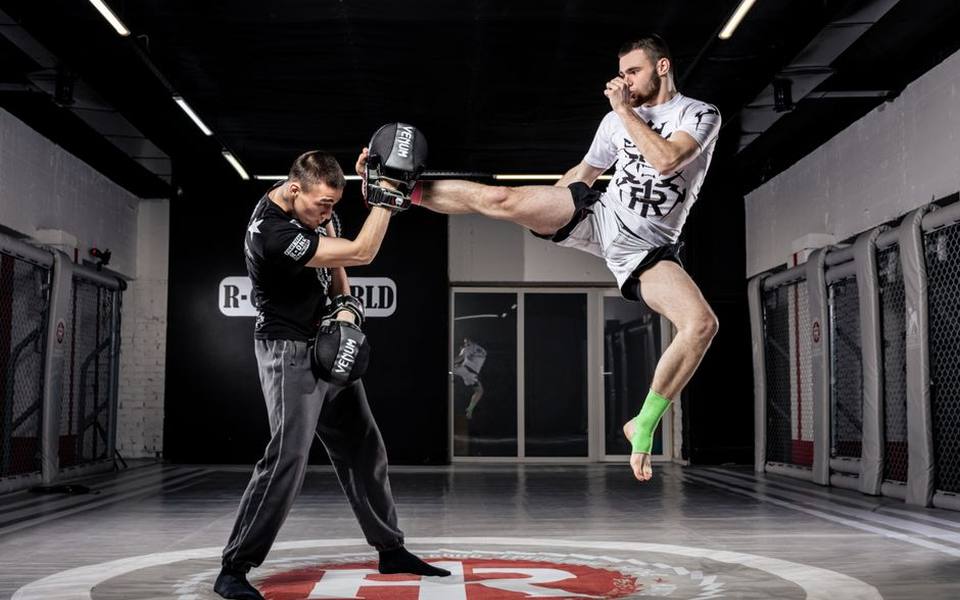
Finding your correct size involves measuring the distance along your tibia from the bottom of your kneecap down to the ankle bend. Most manufacturers offer small through extra-large sizes based on fighter height and shin length rather than total body weight. When visiting specialized retail outlets or clubs like traditional styles dojos and kickboxing clubs across the country, strap the guards on and take a few vigorous fight-stance hops to confirm stability.
Genuine leather models mold to the contours of your shin over time, delivering unmatched longevity and a personalized fit after a break-in period. High-end synthetic alternatives, such as microfiber leather, have closed the performance gap significantly, offering superior resistance to sweat absorption and zero cracking without requiring extensive break-in time. Whichever material you choose, prioritize guards that contour snugly around your calf to prevent the annoying twisting that disrupts timing during rounds.
Building a Balanced Conditioning and Gear Care Routine
Long-term durability in combat sports requires harmonizing your flexibility work, neck strengthening, and striking volume into a sustainable weekly timetable. Attempting heavy bag sessions, maximal neck resistance, and aggressive PNF stretching on the same day invites systemic central nervous system fatigue and chronic overuse injuries. Schedule your dynamic kick higher stretches prior to striking classes, while reserving intense isometric neck training for light conditioning days or the end of grappling workouts.
Routine maintenance of your protective equipment is just as critical for personal hygiene and gear longevity. Damp gloves and sweat-soaked shin pads breed bacteria, foul odors, and skin infections like ringworm or staph, which frequently spread in gyms. Never leave your gear sealed inside a dark gym bag overnight. Wipe down the interior lining of your shin guards and bag gloves with antibacterial wipes after every session, and use cedar deodorizing inserts to absorb moisture naturally without degrading the inner foam.
Whether you are enrolled in a dedicated Brazilian Jiu-Jitsu program or training for full-contact kickboxing, investing in your body through intelligent conditioning is what keeps you on the mats for decades. By pairing targeted mobility routines and neck stabilization drills with high-grade protective gear, you construct an athletic base capable of delivering high-impact techniques while shielding yourself from unnecessary wear and tear.
Published 2026-09-21 · reviewed with each rebuild, last September 2026.
Find martial arts schools near you
The directory lists 32,877 martial arts schools by state and city — pick your state or use the “Near me” button in the header.
More guides
-
 Owning
Establishing a Proper Heavy Bag Routine and Striking Technique at Home
-
 Safety
Brazilian Jiu-Jitsu for Beginners: Tips, Fundamentals, and Mat Health
-
 Buying
Finding the Right Fit: A Guide to Sizing Your Jiu-Jitsu Uniform and Cross-Training Gear
-
 Money
MoneyHow Much Do Martial Arts Classes Cost? Membership Fees Breakdown
-
 Owning
What Is Mixed Martial Arts? Beginner Overview and Training Guide
-
 Owning
The History, Origins, and Physical Demands of Brazilian Jiu-Jitsu
-
 Owning
Traditional Martial Arts Guide: Understanding Wushu, Silat, and Naginata
-
 Owning
Understanding Mixed Martial Arts for Beginners
-
 Safety
How to Wrap Your Hands for Boxing: Step-by-Step Wrist and Knuckle Protection Guide
-
 Buying
Best Jiu-Jitsu Gis and Apparel: Complete Buyer's Guide and Sizing Chart
-
 Buying
BJJ vs Judo vs Wrestling vs No-Gi: Which Grappling Art Is Right for You?
-
 Buying
How to Choose the Best Jiu-Jitsu and MMA Gym Near You
-
 Owning
Brazilian Jiu-Jitsu for Beginners: Rules, Belt Ranks, and Mat Training
-
 Buying
Kickboxing Classes & Cardio Fitness Workouts Guide
-
 Owning
Martial Arts Belt Ranking Systems: Progression, Orders, and Displays
-
 Buying
Jeet Kune Do: History, Philosophy, and Modern Training Guide
-
 Buying
BJJ Gis and Uniforms Buyer's Guide: Brands, Fit, and Care
-
 Buying
Gracie Jiu-Jitsu Lineages, Academy Networks, and Training Philosophies
-
 Buying
10th Planet Jiu-Jitsu: Complete Guide to the No-Gi System and Academies
-
 Safety
Tai Chi Classes for Seniors: Health Benefits, Styles, and Practice Guide
-
 Owning
Heavy Bag and Boxing Workouts: Home Setup, Gear Selection, and Training Guide
-
 Buying
Adult Karate and Taekwondo Classes: Getting Started and Gi Sizing
-
 Owning
IBJJF Tournaments and Competition Guide: Databases, Rules, and Events
-
 Safety
Custom vs. Boil-and-Bite Mouthguards: Complete Selection and Fitting Guide
-
 Safety
Women's and Adult Self-Defense Training Guide: Techniques, Classes, and Systems
-
 Owning
Traditional Chinese Martial Arts: Shaolin, Wing Chun, Jeet Kune Do, and Gear Guide
-
 Buying
Adult Martial Arts Guide: Choosing the Right Style, Gym, and Training Class
-
 Buying
Filipino Martial Arts, Kenpo, Aikido, and HEMA: Comparing Traditional Combat Styles
-
 Owning
Heavy Bag Workout Guide: Routines, Drills, and Training for Cardio and Weight Loss
-
 Buying
Muay Thai and Cardio Kickboxing Classes: Training, Techniques, and Fitness Programs
-
 Buying
BJJ Gis, Rash Guards, and Apparel: How to Choose, Size, and Care for Jiu-Jitsu Gear
-
 Safety
Women's and Adult Self-Defense Classes: Selecting Programs for Real-World Safety
-
 Owning
Martial Arts Belts and Ranks: Belt Order, Taping, and Display Racks Guide
-
 Buying
Kids and Toddler Martial Arts: Complete Guide to Classes, Camps, and Family Dojos
-
 Owning
How to Hang a Heavy Bag: Ceiling and Wall Mounting Installation Guide
-
 Buying
Brazilian Jiu-Jitsu Schools, Academies, and Lineages: A Complete Guide
-
 Buying
Martial Arts Gyms, Fitness Studios, and Dojos Directory Guide
-
 Buying
Traditional Martial Arts Styles and Specialized Disciplines Guide
-
 Owning
BJJ and Martial Arts Gi Selection, Sizing, and Equipment Care Guide