The Broad Landscape of Traditional Chinese Martial Arts
Traditional Chinese martial arts, collectively known as Kung Fu or Wushu, represent hundreds of distinct combat systems developed over centuries. Rather than a single monolithic discipline, Chinese martial arts divide broadly along geographic and philosophical lines. Northern systems traditionally emphasize expansive footwork, long-range strikes, and dynamic kicking, while Southern systems prioritize compact hand techniques, low stances, and infighting. Understanding these distinct movement philosophies helps prospective students choose a discipline that aligns with their personal mobility and training objectives.
Beyond geography, martial traditions are categorized as external or internal. External disciplines, such as Shaolin and Choy Li Fut, build physical attributes through vigorous conditioning, repetitive drills, and muscular endurance. Internal disciplines, including Tai Chi Chuan, Baguazhang, and Xing Yi Quan, place greater emphasis on structural alignment, breath coordination, and redirecting incoming force. Most complete schools recognize that these categories converge over time, as internal arts require physical structure and external arts require internal relaxation to function effectively.
Choosing a discipline requires balancing personal goals with the realities of modern training. Some practitioners pursue forms for health, balance, and historical appreciation, while others seek pressure-tested combative applications. Exploring directories that catalog traditional styles provides a practical starting point for identifying what lineages are active in your area and understanding how local programs structure their curricula.
Shaolin Kung Fu Principles and Modern Academies
Shaolin Kung Fu traces its roots to the legendary Shaolin Monastery in Henan Province, developing into one of the most comprehensive martial systems in the world. The curriculum integrates empty-hand forms based on animal movements, classical weapon handling, and rigorous calisthenics. Foundational training centers heavily on stance work, particularly the horse stance and bow stance, which condition the lower body to generate power from the ground up while building extraordinary mental discipline.
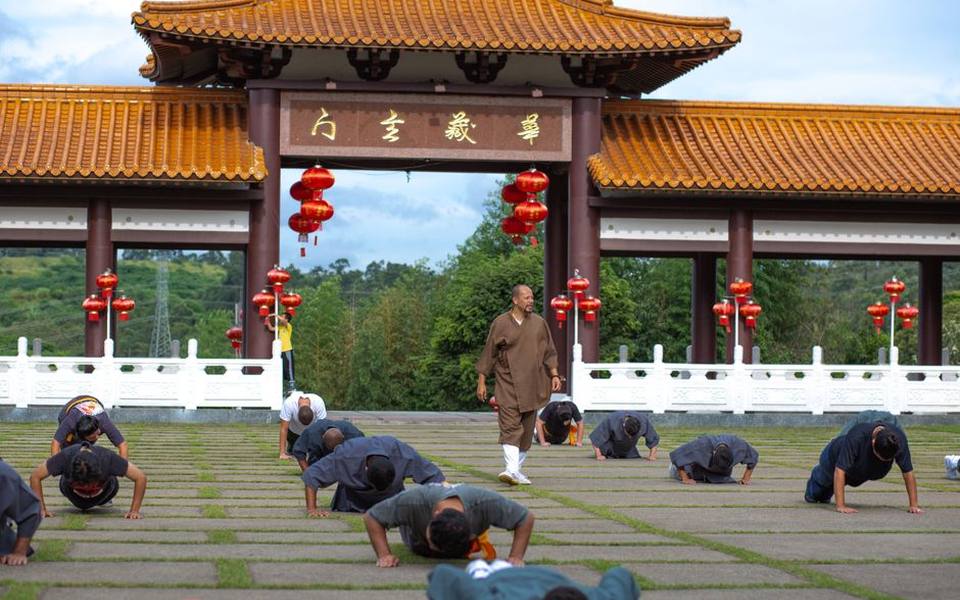
Enrolling in a reputable Shaolin kung fu academy typically introduces students to a strict progression model. Early months focus almost exclusively on basic kicks, stance transitions, flexibility drills, and cardiovascular conditioning before empty-hand forms are introduced. These solo routines, known as taolu, preserve structural principles and movement combinations. A well-rounded academy balances these classical sequences with two-person sets, contact drills, and padded weapon practice to ensure students understand the martial application behind every movement.
When evaluating a Shaolin program, prospective practitioners should observe whether conditioning matches practical instruction. Some commercial schools emphasize theatrical, acrobatic wushu tailored for stage performance rather than combative kung fu. Genuine traditional academies maintain strong roots in foundational body mechanics, structural alignment, and physical conditioning, often offering dedicated kids classes that introduce younger students to foundational coordination, discipline, and flexibility early on.
Explosive Power Systems: Xing Yi Quan and Baji Quan
For practitioners seeking direct, combative mechanics, internal and military-rooted styles offer distinct advantages. Xing Yi Quan is renowned for its linear aggression and economy of movement. Rooted in spear mechanics, the style utilizes five core fist methods corresponding to classical elements, alongside twelve animal forms. The foundational posture, known as the Santi Shi stance, develops full-body unity, training the practitioner to drop their mass and discharge explosive kinetic energy through short-range strikes.
Baji Quan presents another formidable close-quarters discipline, historically favored by imperial bodyguards in Northern China. Characterized by explosive elbow strikes, shoulder checks, and sudden stomping steps known as Zhen Jiao, Baji generates violent bursts of power through waist rotation and rapid weight drops. Practitioners train opening methods to penetrate an opponent's guard, immediately bridging distance to deliver heavy, concussive strikes at close proximity.
Both systems demand rigorous solo line drills followed by resisted partner training. Unlike more circular styles, Xing Yi and Baji train the student to move straight through the opponent's centerline. While finding an experienced instructor can require substantial searching outside metropolitan areas, these arts provide practical, grounded mechanics that translate exceptionally well to real-world self-defense and modern hand-to-hand combat.
Wing Chun Fundamentals, Trapping, and Selecting Classes
Wing Chun is a Southern Chinese system engineered specifically for close-range combat, efficiency, and swift resolution of physical encounters. Built upon centerline theory, the style dictates that the shortest distance between two points is a straight line through the core of both combatants. Practitioners utilize simultaneous attack and defense, deflecting incoming strikes while striking on the same tempo using compact movements such as the Tan Sau, Bong Sau, and signature vertical chain punches.
The cornerstone of intermediate Wing Chun training is Chi Sau, or sticking hands. This tactile sensitivity exercise trains students to interpret changes in structural pressure, deflection, and balance through forearm contact rather than relying solely on visual cues. In tight quarters where reaction time is minimal, Chi Sau develops subconscious reflex responses, allowing a practitioner to trap an opponent's limbs and exploit openings along the central axis.
Finding high-quality wing chun classes requires screening for practical pressure testing. Prospective students across major hubs, including those researching martial arts schools in California, should visit during advanced sessions to see how instructors transition from cooperative sensitivity drills into dynamic, unscripted sparring. Programs that avoid sparring entirely often develop unrealistic expectations regarding how sensitivity drills hold up against aggressive, non-compliant strikers.
Sourcing and Installing a Wing Chun Wooden Dummy
The Muk Yan Jong, or wooden dummy, is the premier solo training apparatus for Wing Chun practitioners. Designed to simulate an opponent's physical frame, the dummy features three arms representing high and mid-level attacks alongside a curved lower leg that simulates a lead stance. Practicing the classical wooden dummy form trains correct angling, footwork around a rooted opponent, bone conditioning in the forearms, and precise structural alignment without needing an active training partner.
When preparing to buy wooden dummy equipment, build quality and materials are critical factors. Traditional dummies are carved from dense solid hardwoods such as teak, elm, or oak, while more economical options utilize laminated timber blocks. A solid hardwood trunk handles repetitive impact over decades without cracking, whereas cheaper composite models may split along seams under heavy, repetitive forearm strikes. Inspecting the arm joints and trunk pegs ensures the timber will tolerate sustained vibration.
Practitioners searching for a wing chun wooden dummy for sale must also evaluate installation methods. Traditional models hang from horizontal flexible wooden slats mounted to wall studs, providing realistic spring and rebound upon impact. If you live in an apartment or cannot drill into supporting walls, freestanding metal bases with counterweights or heavy suction cups offer a viable alternative. Expect shipping freight charges to influence total costs significantly due to the trunk's substantial weight.
Bruce Lee, Jeet Kune Do, and Stance Mechanics
Developed by Bruce Lee in the late 1960s, Jeet Kune Do represents an evolution out of classical Wing Chun toward an open, formless combat philosophy. Lee identified limitations in rigid classical structures, stripping away formalized choreography in favor of what proved efficient, direct, and functional in live combat. Integrating footwork from Western fencing and punching mechanics from Western boxing, JKD emphasizes interception, breaking rhythm, and eliminating telegraphic movement before strikes.
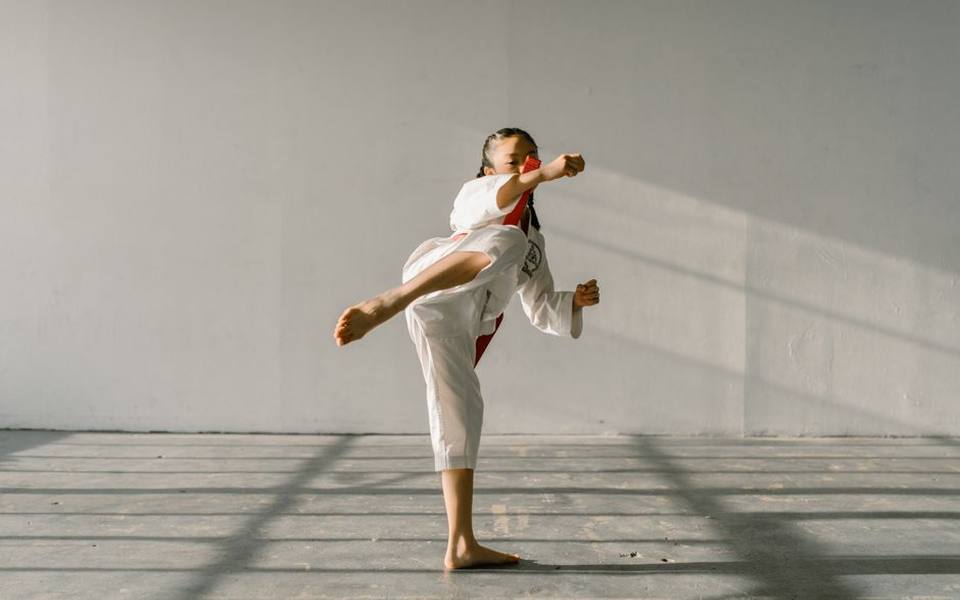
The foundational jeet kune do stance, known as the By-Jong posture, deliberately places the practitioner's strongest side forward. Unlike standard boxing setups where the power hand stays back, Lee argued that the lead hand and foot should deliver the majority of strikes because they sit closest to the target. The stance remains relaxed, light on the balls of the feet, and constantly mobile, allowing the practitioner to adjust range instantly and intercept attacks while in transition.
Those looking to study the art should distinguish between Original JKD, which emphasizes the specific physical techniques Bruce Lee taught in Seattle, Oakland, and Los Angeles, and JKD Concepts, which applies his philosophical framework to assimilate techniques from Muay Thai, Savate, and Indonesian Silat. Both paths offer legitimate training environments, provided the school maintains regular contact drills and athletic conditioning.
The Art of the Classical Tai Chi Sword Form
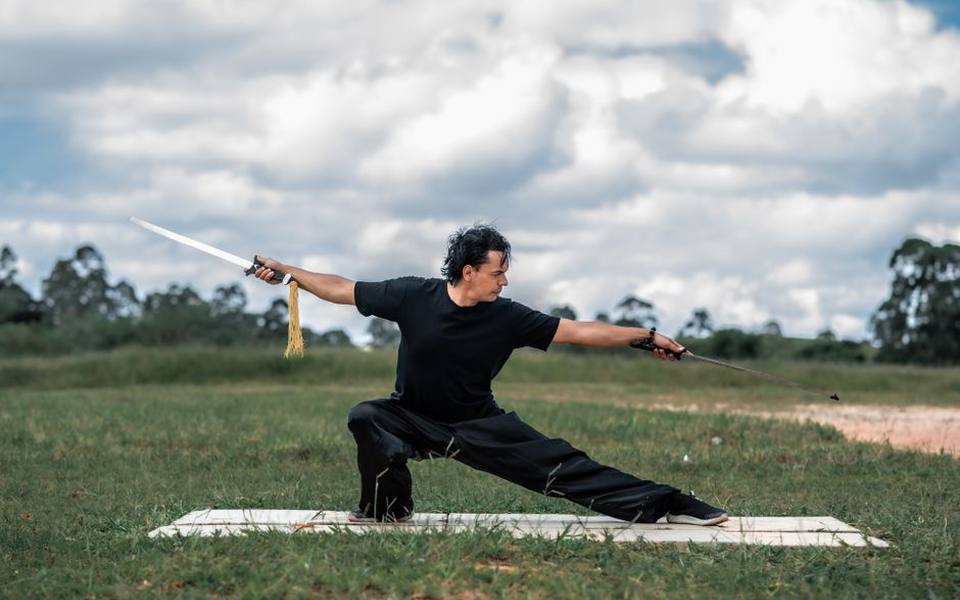
The double-edged straight sword, or Jian, represents the pinnacle of classical Chinese weapon training and is central to the upper curriculum of Tai Chi. Unlike broadswords that rely on sweeping chops and physical momentum, the straight sword is a weapon of finesse, deflection, slicing, and precision thrusts. Learning a tai chi sword form teaches the student to extend body mechanics, mental focus, and internal energy past the fingertips to the very tip of the blade.
Sword routines emphasize fluid circular stepping, wrist articulation, and synchronized whole-body movement. Every maneuver originates in the dantian and legs, traveling through the spine and shoulder before manifesting in the blade. Techniques such as Pi (splitting), Liao (upward slicing), and Ci (thrusting) require delicate control of the sword's balance point, forcing the practitioner to maintain core stability and upright posture throughout continuous direction changes.
Beginning students typically start with lightweight wooden practice swords to memorize sequences safely without fatigue. As proficiency grows, practitioners transition to unsharpened spring-steel training blades that offer realistic weight, flex, and balance. Training with historical-weight steel challenges shoulder endurance and reveals structural flaws immediately, reinforcing proper skeletal alignment during extended forms practice.
Conditioning the Body: Understanding Iron Palm Training
Iron palm training is an ancient conditioning methodology designed to strengthen the bones, tendons, and connective tissues of the hands for heavy impact. Rather than callousing the skin or deadening nerve endings through reckless trauma, authentic iron palm is a gradual, scientific adaptation process. Practitioners drop the hand using relaxed gravity onto specialized striking bags filled initially with soft beans, advancing over several years to polished gravel, lead, or steel shot.
A non-negotiable component of legitimate conditioning is the application of Dit Da Jow, a traditional herbal liniment formulated to increase blood circulation, disperse micro-hematomas, and prevent chronic arthritis. Practicing strikes without proper liniment and guided instruction risks severe, permanent nerve damage, joint deformation, and bone spurs. Modern sports medicine validates the underlying mechanism as Wolff's Law—bone remodeling under controlled mechanical stress—provided rest intervals are strictly observed.
Prospective students should approach iron palm claims with healthy skepticism. Legitimate teachers never encourage beginners to strike bricks or hard surfaces without years of graduated preparatory conditioning. If an instructor dismisses safety protocols, downplays recovery times, or refuses to explain the physiological progression, seek training elsewhere to protect long-term hand dexterity.
Evaluating Lineage, Sparring, and School Environment
Selecting a traditional Chinese martial arts school requires navigating marketing claims, ornate certificates, and complex lineages. An instructor should speak openly about their teachers and provide clear documentation of their training background without resorting to mystical secrecy. Legitimate lineage matters in traditional arts because it reflects the depth and completeness of the curriculum being passed down through successive generations.
Equally important is observing the training culture during a live class visit. A balanced program demonstrates clear application for every movement found in their classical forms. Look for environments where students engage in progressive resistance training, ranging from cooperative two-person drills to controlled sparring with protective gear. Programs active among martial arts schools in New York and other competitive markets increasingly recognize that traditional forms must be backed by live sparring to remain functional.
Examine the overall school environment for cleanliness, student retention, and respectful interactions between senior students and novices. Transparent pricing structures without mandatory multi-year commitments or excessive promotion fees indicate a trustworthy operation. Taking trial classes across different programs lets you experience firsthand whether an academy's teaching pace, conditioning expectations, and community align with your personal martial arts path.
Integrating Traditional Systems with Modern Training
While traditional Chinese arts offer rich historical value and specialized striking mechanics, modern practitioners often blend classical techniques with contemporary combat sports. Cross-training Wing Chun infighting, Baji power mechanics, or Xing Yi linear entries alongside contemporary boxing footwork can yield a distinctive and highly effective standup approach. Many fighters find that classical trap mechanics and oblique kicks surprise opponents unfamiliar with traditional infighting.
However, traditional systems historically lack comprehensive ground fighting curricula. Integrating foundational grappling from complementary combat disciplines ensures a well-rounded self-defense capability. Incorporating aspects of modern MMA training allows practitioners to pressure-test their traditional hand mechanics, footwork, and balance against aggressive wrestlers, kickboxers, and submission specialists.
Ultimately, the value of traditional Chinese martial arts lies in their holistic approach to physical health, mental focus, and combative efficiency. Whether practicing classical weapon forms for personal discipline or drilling close-range hand trapping for personal security, approaching these arts with dedication, analytical thinking, and open-mindedness ensures a deeply rewarding lifelong practice.
Published 2026-09-21 · reviewed with each rebuild, last September 2026.
Find martial arts schools near you
The directory lists 32,877 martial arts schools by state and city — pick your state or use the “Near me” button in the header.
More guides
-
 Owning
Establishing a Proper Heavy Bag Routine and Striking Technique at Home
-
 Safety
Brazilian Jiu-Jitsu for Beginners: Tips, Fundamentals, and Mat Health
-
 Buying
Finding the Right Fit: A Guide to Sizing Your Jiu-Jitsu Uniform and Cross-Training Gear
-
 Money
MoneyHow Much Do Martial Arts Classes Cost? Membership Fees Breakdown
-
 Owning
What Is Mixed Martial Arts? Beginner Overview and Training Guide
-
 Owning
The History, Origins, and Physical Demands of Brazilian Jiu-Jitsu
-
 Owning
Traditional Martial Arts Guide: Understanding Wushu, Silat, and Naginata
-
 Owning
Understanding Mixed Martial Arts for Beginners
-
 Safety
How to Wrap Your Hands for Boxing: Step-by-Step Wrist and Knuckle Protection Guide
-
 Buying
Best Jiu-Jitsu Gis and Apparel: Complete Buyer's Guide and Sizing Chart
-
 Buying
BJJ vs Judo vs Wrestling vs No-Gi: Which Grappling Art Is Right for You?
-
 Buying
How to Choose the Best Jiu-Jitsu and MMA Gym Near You
-
 Owning
Brazilian Jiu-Jitsu for Beginners: Rules, Belt Ranks, and Mat Training
-
 Buying
Kickboxing Classes & Cardio Fitness Workouts Guide
-
 Owning
Martial Arts Belt Ranking Systems: Progression, Orders, and Displays
-
 Buying
Jeet Kune Do: History, Philosophy, and Modern Training Guide
-
 Buying
BJJ Gis and Uniforms Buyer's Guide: Brands, Fit, and Care
-
 Buying
Gracie Jiu-Jitsu Lineages, Academy Networks, and Training Philosophies
-
 Buying
10th Planet Jiu-Jitsu: Complete Guide to the No-Gi System and Academies
-
 Safety
Tai Chi Classes for Seniors: Health Benefits, Styles, and Practice Guide
-
 Owning
Heavy Bag and Boxing Workouts: Home Setup, Gear Selection, and Training Guide
-
 Buying
Adult Karate and Taekwondo Classes: Getting Started and Gi Sizing
-
 Owning
IBJJF Tournaments and Competition Guide: Databases, Rules, and Events
-
 Safety
Custom vs. Boil-and-Bite Mouthguards: Complete Selection and Fitting Guide
-
 Safety
Women's and Adult Self-Defense Training Guide: Techniques, Classes, and Systems
-
 Buying
Adult Martial Arts Guide: Choosing the Right Style, Gym, and Training Class
-
 Buying
Filipino Martial Arts, Kenpo, Aikido, and HEMA: Comparing Traditional Combat Styles
-
 Owning
Heavy Bag Workout Guide: Routines, Drills, and Training for Cardio and Weight Loss
-
 Buying
Muay Thai and Cardio Kickboxing Classes: Training, Techniques, and Fitness Programs
-
 Buying
BJJ Gis, Rash Guards, and Apparel: How to Choose, Size, and Care for Jiu-Jitsu Gear
-
 Safety
Women's and Adult Self-Defense Classes: Selecting Programs for Real-World Safety
-
 Owning
Martial Arts Belts and Ranks: Belt Order, Taping, and Display Racks Guide
-
 Safety
Martial Arts Conditioning, High-Kick Mobility, and Protective Gear Guide
-
 Buying
Kids and Toddler Martial Arts: Complete Guide to Classes, Camps, and Family Dojos
-
 Owning
How to Hang a Heavy Bag: Ceiling and Wall Mounting Installation Guide
-
 Buying
Brazilian Jiu-Jitsu Schools, Academies, and Lineages: A Complete Guide
-
 Buying
Martial Arts Gyms, Fitness Studios, and Dojos Directory Guide
-
 Buying
Traditional Martial Arts Styles and Specialized Disciplines Guide
-
 Owning
BJJ and Martial Arts Gi Selection, Sizing, and Equipment Care Guide