Understanding the Name and Core Meaning of the Art
Jeet Kune Do translates directly from Cantonese as the way of the intercepting fist. Founded by Bruce Lee in the late 1960s, it was conceived not as a rigid style with predetermined patterns, but as a practical philosophy of personal combat. The central idea is deceptively straightforward: instead of blocking an incoming strike and then launching a counterattack in two separate beats, a practitioner aims to intercept the opponent during their initiation phase, neutralizing danger while striking simultaneously.
Because Cantonese romanization was unfamiliar to many Westerners when Bruce Lee rose to global prominence, newcomers frequently mishear or misspell the title. You will often see searches or forum questions referencing june kune do, june keet do, ji kun do, or jeet kondo. Others inadvertently blend the phrase with Korean disciplines, resulting in terms like jet kwon do, or abbreviate it casually to jeet do. Regardless of these phonetic variations, they all point to the same functional discipline developed by Lee.
Understanding this linguistic background helps clarify why the discipline rejects the rigid labels common to many martial practices. Lee resisted turning his method into an organized franchise with fixed katas or memorized sequences. He feared that standardizing movements into a formal syllabus would freeze combat dynamics in time. When you research the art today, keeping this foundational principle in mind helps you separate authentic instructors from programs that merely trade on Hollywood nostalgia.
Historical Origins and Bruce Lee's Evolution
The roots of the system trace back to Bruce Lee's early training under Ip Man in Hong Kong, where he studied Wing Chun kung fu. Wing Chun provided Lee with a deep appreciation for close-range centerline control, rapid trapping, and economy of movement. However, after moving to the United States and engaging in practical sparring sessions with athletes of various weight classes and stylistic backgrounds, Lee began identifying serious functional limitations in traditional, closed-system training.
A pivotal turning point occurred around 1964 following Lee's private challenge match with master Wong Jack Man in Oakland. While Lee won the encounter, he was profoundly dissatisfied with how winded and inefficient he felt during the prolonged exchange. He realized that classical forms and stylized hand postures failed against an adversary who moved unpredictably and refused to play by predetermined stylistic rules. He resolved to strip away decorative movements and build a methodology grounded entirely in human biomechanics, leverage, and real-time timing.
From that point forward, Lee immersed himself in Western boxing and Olympic fencing, studying how champions like Muhammad Ali used footwork, rhythm breaking, and distance management. He analyzed how foil fencers executed quick stop-hits with the leading hand and transferred that principle to hand-to-hand combat. By 1967, while teaching private groups and running studios that contributed to the rich history of martial arts schools in California, he officially began calling this evolving philosophy Jeet Kune Do.
Throughout the late 1960s and early 1970s, the system transformed continuously. Lee refused to close the curriculum, insisting that combat knowledge must remain flexible. What started as an aggressive modification of Southern Chinese boxing evolved into an open-ended exploration of striking mechanics, grappling defense, athletic conditioning, and psychological awareness that permanently altered modern martial arts culture.
The Philosophical Bedrock: Formlessness and Simplicity
At its philosophical core, the discipline is guided by a famous maxim Lee popularized: absorb what is useful, reject what is useless, and add what is essentially your own. Unlike traditional disciplines where students spend years attempting to mimic the body mechanics of a deceased master, this training begins by acknowledging that no two human bodies are built identically. An athlete with long limbs and quick reflexes requires different tactical tools than a shorter, heavily muscled counter-fighter.
This emphasis on individuality means the philosophy actively rejects dogmatic adherence to rigid stances. Lee often used water as a metaphor for tactical adaptability. Water can flow smoothly, fill any container, crash forcefully through obstacles, or yield without breaking. In a self-defense context, an intercepting practitioner avoids committing emotionally or physically to a predetermined game plan, choosing instead to adjust continuously to whatever energy and distance the opponent presents.
Simplicity is another central pillar. Rather than accumulating dozens of flashy maneuvers that look impressive in choreographed demonstrations, students are encouraged to pare away excess motion. In a chaotic encounter, complex multi-step techniques typically fail under stress. Efficiency, directness, and mechanical economy take precedence over aesthetic flair. If a straight punch requires the shortest travel path to hit a target, delivering that strike cleanly without preliminary winding is prioritized above all else.
Core Tactical Principles and Mechanical Concepts
Mechanically, the system is built around several interlocking combat principles. Primary among them is the non-telegraphic strike. In conventional fighting, beginners often pull back their shoulder, shift their weight backward, or flair an elbow just before firing a blow. This small preparatory twitch gives the opponent reaction time. Students in this discipline spend months drilling the lead punch so that it launches directly from the guard without any prior visual signal.
Another cornerstone concept is the stop-hit or stop-kick, heavily adapted from fencing. When an aggressor steps forward to swing a wild punch, their body weight shifts and their defense naturally opens up. Rather than waiting for the strike to arrive and attempting to parry it, the practitioner drives a side kick directly into the attacker's advancing lead knee or shin. By breaking the opponent's structure before their technique can mature, the attack is extinguished at its origin.
Centerline theory, inherited from Wing Chun but modified for mobile footwork, dictates that the quickest and most damaging strikes travel along the imaginary vertical line connecting both fighters' vital organs. Practitioners position their guard to protect their own throat, solar plexus, and groin while simultaneously controlling the angles that expose those same targets on the opponent. Footwork acts as the delivery vehicle, using quick pendulum steps and push-shuffles to enter and exit striking distance safely.
The Literature: The Tao of Jeet Kune Do and Essential Reading
Anyone researching this martial art inevitably encounters Bruce Lee's written legacy. During a prolonged period of mandatory bed rest following a severe sacral nerve injury in 1970, Lee began compiling extensive personal notes, training journals, anatomical sketches, and philosophical musings. Following his sudden passing in 1973, his widow Linda Lee Cadwell, along with martial artist Gilbert Johnson and editor Linda Cheng, organized these loose notebooks into a published volume titled the Tao of Jeet Kune Do.
The book quickly achieved legendary status, but modern readers should understand its nature before purchasing it. It is not an instructional step-by-step manual designed to teach someone how to fight from scratch in their living room. Instead, it represents an unfiltered look inside an elite martial artist's working laboratory. Pages feature rough pencil sketches of foot angles, quotations from classic Western boxing and fencing manuals, and candid notes dissecting the psychological components of combat fear.
Alongside the original text, serious students often seek out supplementary books compiled from Lee's early notebooks, such as Bruce Lee's Fighting Method and Letters of the Dragon. These volumes give practical context to the aphorisms found in the primary work. While reading these books offers invaluable insight into Lee's thought process, instructors universally caution that literature cannot replace physical coaching, real-time tactile feedback, and honest partner resistance on the mat.
Jeet Kune Do and the Roots of Modern Mixed Martial Arts
Many combat sports historians describe Bruce Lee as an early pioneer of modern mixed fighting competitions. Decades before the Ultimate Fighting Championship debuted, Lee recognized that real violence does not occur inside stylistic silos. He cross-trained vigorously, combining the punching combinations of Western boxing with low-line kicking from Savate and Wing Chun, while exploring locks and takedowns derived from Judo and Western wrestling.
While traditional gyms in the 1960s strictly forbade mixing different ethnic styles, Lee encouraged his students to experiment across disciplines. Today, the training philosophy in modern mixed martial arts programs reflects this identical pragmatism. Professional fighters routinely blend striking, wrestling, and ground grappling into a singular, seamless combat toolkit, validating the multi-range perspective Lee championed more than half a century ago.
However, key distinctions remain between competitive combat sports and pure interception training. Contemporary cage sports operate under strict weight divisions, round limits, and safety regulations that prohibit groin strikes, eye gouges, and direct blows to the knee joints. The intercepting discipline was developed primarily for practical street defense, where rules do not exist, multiple attackers may be present, and decisive stopping power must be achieved without athletic referee intervention.
The Split: Original Lineage versus Conceptual JKD
After Bruce Lee passed away, his senior students naturally interpreted his teachings through their own personal experiences, leading to two primary training lineages visible today. The first camp is commonly referred to as Original JKD or the Jun Fan approach. Promoted by close students such as Ted Wong, this philosophy focuses on preserving the precise technical mechanics, stances, and training routines that Lee taught between 1967 and 1973, viewing that specific era as the peak of his tactical efficiency.
The second camp, widely known as JKD Concepts, was championed by Dan Inosanto and Richard Bustillo. This group interprets Lee's work as a dynamic methodology rather than a closed historical curriculum. Instructors in this lineage continue Lee's cross-training tradition by incorporating functional techniques from modern arts like Muay Thai, Brazilian Jiu-Jitsu, and Filipino Kali, testing new tools against Lee's core interception principles.
Neither branch is inherently superior; rather, they serve different goals. If your goal is to experience Bruce Lee's historical mechanics with pinpoint physical fidelity, an Original lineage school provides a focused, authentic time capsule. If your goal is to continue the evolutionary path of cross-training and weapon work across diverse combat ranges, a Concepts academy offers a broader, multi-disciplinary environment.
What to Expect in a Modern Training Class
Stepping into an academy teaching this art looks very different from entering classic traditional martial arts schools. You will rarely find formal uniforms like heavy white gis, bowing to ancestral shrines, or lines of students punching the air in unison. Instead, classes usually resemble an athletic hybrid of a boxing gym and an open striking workshop, with practitioners wearing comfortable athletic apparel, t-shirts, and protective cross-training footwear.
A typical session opens with dynamic mobility drills and footwork conditioning. Because distance management is the bedrock of interception, instructors dedicate considerable time to quick linear retreats, lateral circling, and explosive push-shuffle entries. Students practice shifting their balance effortlessly without crossing their feet or providing visual clues that would betray their forward intentions to an observant opponent.
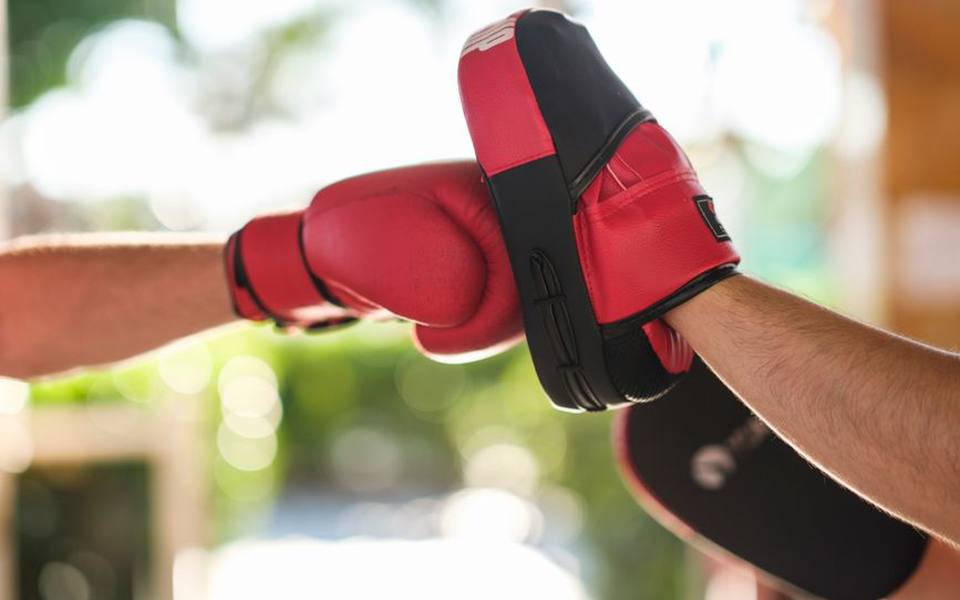
The bulk of training revolves around partner pad work and focus mitt drills. Much like modern kickboxing classes, students hit Thai pads and curved mitts to develop real-world impact, hand speed, and clean combinations. Experienced practitioners then transition into progressive sparring drills, starting with controlled, single-lead intercepting exercises before escalating to unscripted, padded sparring designed to test timing against live defensive pressure.
How to Find and Evaluate Reputable Schools
Finding high-quality instruction requires careful vetting because no central international governing board licenses every instructor. Unlike Olympic disciplines that feature standardized state certifications, any martial arts coach can claim to teach interception concepts. When researching prospective schools, your primary filter should always be direct lineage traceability back to recognized first-generation students of Bruce Lee, such as Dan Inosanto, Ted Wong, Jerry Poteet, or Taky Kimura.
Legitimate instructors are completely transparent about who certified them, how long they apprenticed under their teacher, and which branch of the art they represent. Be wary of academies that shroud their origins in vague mystique or demand long-term, non-refundable contracts before letting you observe a live class. A reputable gym welcomes prospective students to watch advanced sparring and ask honest questions about the curriculum's lineage and functional objectives.
Using an independent directory helps streamline your search across regions. With more than 20,000 listings across top states available in a comprehensive martial arts school directory, you can evaluate gym credentials, class formats, and student reviews side by side. Taking the time to visit a local studio in person ensures that the instruction matches your personal goals for fitness, self-defense, and genuine martial arts lineage.
Who Benefits Most from Practicing This Discipline
Practicing an interception-focused martial art offers significant benefits for adults seeking practical self-defense without the ceremonial baggage of traditional arts. Because the curriculum prioritizes mechanical leverage and tactical timing over brute strength, it is especially valuable for smaller individuals who want effective tools against heavier opponents. The emphasis on awareness, rapid disengagement, and boundary setting translates directly to real-world personal safety.
Athletes who already possess a foundation in striking or grappling often find that adopting these philosophical concepts enhances their existing skills. A boxer can learn non-telegraphic lead kicks to keep aggressive opponents at bay, while a wrestler can study centerline intercepting strikes to set up explosive takedown attempts. The methodology acts as an operational software layer that improves whatever martial tools you already use.
Ultimately, the art fosters mental adaptability alongside physical capability. By learning to stay calm under physical pressure, respond without hesitation to changing environments, and continually discard inefficient habits, students build confidence that extends far beyond the gym mat. The true aim of the discipline has always been personal liberation through honest self-expression and disciplined movement.
Published 2026-09-21 · reviewed with each rebuild, last September 2026.
Find martial arts schools near you
The directory lists 32,877 martial arts schools by state and city — pick your state or use the “Near me” button in the header.
More guides
-
 Owning
Establishing a Proper Heavy Bag Routine and Striking Technique at Home
-
 Safety
Brazilian Jiu-Jitsu for Beginners: Tips, Fundamentals, and Mat Health
-
 Buying
Finding the Right Fit: A Guide to Sizing Your Jiu-Jitsu Uniform and Cross-Training Gear
-
 Money
MoneyHow Much Do Martial Arts Classes Cost? Membership Fees Breakdown
-
 Owning
What Is Mixed Martial Arts? Beginner Overview and Training Guide
-
 Owning
The History, Origins, and Physical Demands of Brazilian Jiu-Jitsu
-
 Owning
Traditional Martial Arts Guide: Understanding Wushu, Silat, and Naginata
-
 Owning
Understanding Mixed Martial Arts for Beginners
-
 Safety
How to Wrap Your Hands for Boxing: Step-by-Step Wrist and Knuckle Protection Guide
-
 Buying
Best Jiu-Jitsu Gis and Apparel: Complete Buyer's Guide and Sizing Chart
-
 Buying
BJJ vs Judo vs Wrestling vs No-Gi: Which Grappling Art Is Right for You?
-
 Buying
How to Choose the Best Jiu-Jitsu and MMA Gym Near You
-
 Owning
Brazilian Jiu-Jitsu for Beginners: Rules, Belt Ranks, and Mat Training
-
 Buying
Kickboxing Classes & Cardio Fitness Workouts Guide
-
 Owning
Martial Arts Belt Ranking Systems: Progression, Orders, and Displays
-
 Buying
BJJ Gis and Uniforms Buyer's Guide: Brands, Fit, and Care
-
 Buying
Gracie Jiu-Jitsu Lineages, Academy Networks, and Training Philosophies
-
 Buying
10th Planet Jiu-Jitsu: Complete Guide to the No-Gi System and Academies
-
 Safety
Tai Chi Classes for Seniors: Health Benefits, Styles, and Practice Guide
-
 Owning
Heavy Bag and Boxing Workouts: Home Setup, Gear Selection, and Training Guide
-
 Buying
Adult Karate and Taekwondo Classes: Getting Started and Gi Sizing
-
 Owning
IBJJF Tournaments and Competition Guide: Databases, Rules, and Events
-
 Safety
Custom vs. Boil-and-Bite Mouthguards: Complete Selection and Fitting Guide
-
 Safety
Women's and Adult Self-Defense Training Guide: Techniques, Classes, and Systems
-
 Owning
Traditional Chinese Martial Arts: Shaolin, Wing Chun, Jeet Kune Do, and Gear Guide
-
 Buying
Adult Martial Arts Guide: Choosing the Right Style, Gym, and Training Class
-
 Buying
Filipino Martial Arts, Kenpo, Aikido, and HEMA: Comparing Traditional Combat Styles
-
 Owning
Heavy Bag Workout Guide: Routines, Drills, and Training for Cardio and Weight Loss
-
 Buying
Muay Thai and Cardio Kickboxing Classes: Training, Techniques, and Fitness Programs
-
 Buying
BJJ Gis, Rash Guards, and Apparel: How to Choose, Size, and Care for Jiu-Jitsu Gear
-
 Safety
Women's and Adult Self-Defense Classes: Selecting Programs for Real-World Safety
-
 Owning
Martial Arts Belts and Ranks: Belt Order, Taping, and Display Racks Guide
-
 Safety
Martial Arts Conditioning, High-Kick Mobility, and Protective Gear Guide
-
 Buying
Kids and Toddler Martial Arts: Complete Guide to Classes, Camps, and Family Dojos
-
 Owning
How to Hang a Heavy Bag: Ceiling and Wall Mounting Installation Guide
-
 Buying
Brazilian Jiu-Jitsu Schools, Academies, and Lineages: A Complete Guide
-
 Buying
Martial Arts Gyms, Fitness Studios, and Dojos Directory Guide
-
 Buying
Traditional Martial Arts Styles and Specialized Disciplines Guide
-
 Owning
BJJ and Martial Arts Gi Selection, Sizing, and Equipment Care Guide