How Martial Arts Belt Systems Actually Work
Modern martial arts belt systems serve as structured visual roadmaps for both students and instructors. Historically, early combat systems did not use rainbow-colored belts; teachers issued written scrolls or basic certificates to mark advancement. The colored belt framework originated in Japan under judo founder Jigoro Kano in the late nineteenth century to visually separate novices from advanced practitioners. Today, almost every curriculum uses colored cotton waistbands to organize technical curricula, maintain classroom safety during sparring, and set measurable milestones.
While every style maintains its own unique sequence, the universal progression begins with a white belt, symbolizing a blank slate. From there, students typically progress through lighter shades toward darker tones before reaching the black belt level. Darker dyes historically represented the accumulation of sweat, dirt, and repetitive mat hours, though modern belts are dyed industrially. Advancing to the next tier depends on curriculum requirements, attendance consistency, technical proficiency, and time in grade evaluated during formal testing ceremonies.
It is important to remember that ranks do not directly translate from one style to another. A practitioner holding a high rank in a striking art starts over at white belt when entering a ground grappling system. Belts indicate mastery within a specific lineage and methodology, reflecting familiar mechanics and conceptual understanding rather than universal combat dominance. Understanding your chosen school's syllabus helps you set realistic expectations for the multi-year journey toward your goals.
Traditional Karate and Kenpo Belt Order Explained
In traditional Japanese and Okinawan karate, the path from white to black belt usually moves through yellow, orange, green, blue, and brown. However, in American Kenpo and related Kempo lineages, the progression often follows a distinct sequence. A standard kenpo karate belt order usually starts with white, moving to yellow, orange, purple, blue, green, brown, and finally first-degree black. Certain systems swap purple and orange, while others incorporate three distinct levels of brown belt before student ranks conclude.
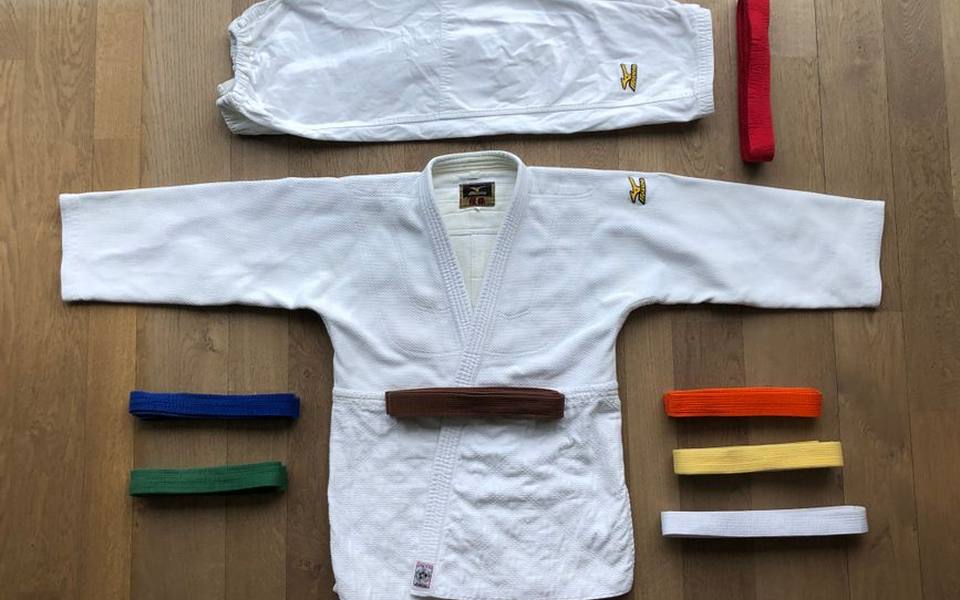
The divergence between spelling variations like Kenpo and Kempo often mirrors slight curriculum shifts, but their foundational rank hierarchies remain remarkably similar. Most kempo belt order structures prioritize close-range self-defense combinations, rapid hand strikes, and joint manipulations. In these systems, moving through intermediate colors marks a student's transition from memorizing isolated self-defense techniques to fluidly stringing counters together against unpredictable attacks.
Prospective students visiting traditional martial arts schools will notice that testing intervals vary widely by organization. Reaching a green or brown belt in Kenpo generally requires between two to four years of consistent practice. Instructors evaluate stance stability, breath control, kata or form execution, and sparring adaptability before granting permission to test for senior colored ranks.
Brazilian Jiu-Jitsu Belt Progression and Striping
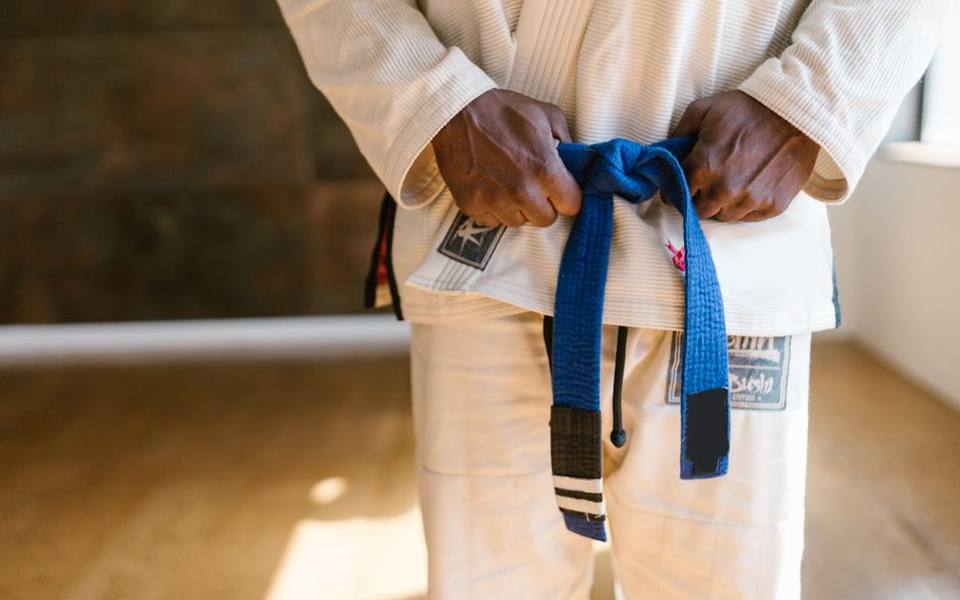
Brazilian Jiu-Jitsu features one of the most demanding belt hierarchies in combat sports. Adult practitioners pass through only five primary ranks: white, blue, purple, brown, and black. Because the number of belts is small, students spend significant time at each level. Earning a blue belt typically takes one to two years of regular mat time, while the total journey to black belt commonly spans eight to twelve years, depending on dedication, athletic background, and academy culture.
To mark incremental progress between major ranks, academies use cloth athletic tape to place up to four white stripes on a belt's black sleeve. Each stripe signifies accumulated mat hours, technical refinement, or competitive consistency. In many Brazilian Jiu-Jitsu schools, four stripes on a current belt indicate that the grappler is approaching the testing phase or instructor review for their next full color promotion.
The BJJ hierarchy places heavy emphasis on live sparring, known as rolling. Unlike styles where forms or memorized sequences determine rank, a jiu-jitsu practitioner must demonstrate the ability to apply techniques against fully resisting training partners. As a result, promotions are rarely tied to fixed testing dates; instructors award belts when a student consistently demonstrates technical mastery and emotional composure under physical pressure.
Junior Versus Adult Belt Systems
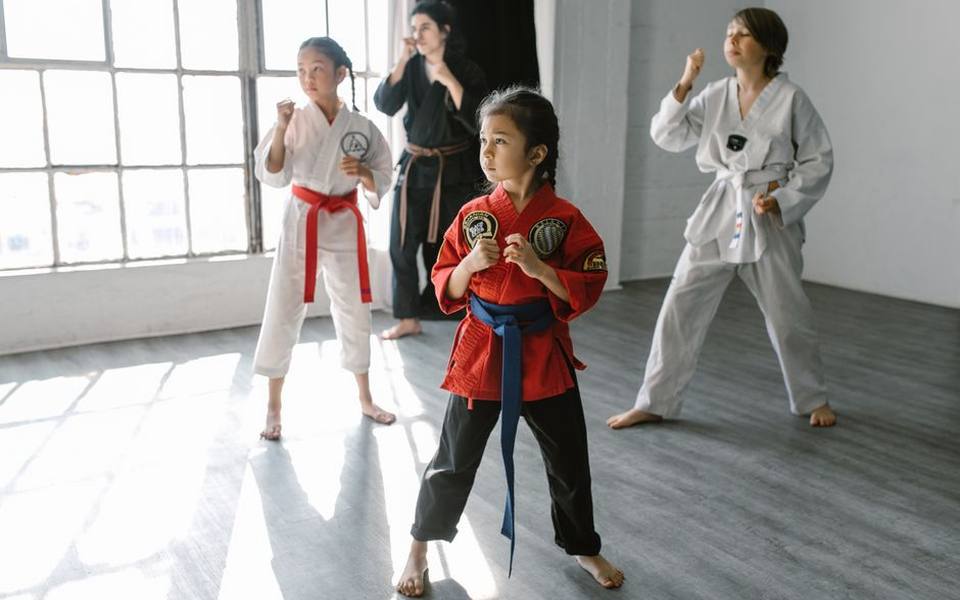
Children have different developmental curves, attention spans, and physical capabilities than adults, leading most styles to create specialized junior ranking ladders. In kids martial arts classes, intermediate belts featuring horizontal center stripes, two-tone color blocks, or colored tape tabs are standard. These intermediate steps provide frequent positive reinforcement, keeping young students motivated while teaching patience and long-term goal setting.
In grappling systems, the contrast between youth and adult ranks is codified strictly to protect developmental integrity. The International Brazilian Jiu-Jitsu Federation, for example, utilizes gray, yellow, orange, and green belts exclusively for competitors under age sixteen. These youth ranks feature white-stripe, solid, and black-stripe variations within each color tier, creating sixteen micro-levels before a practitioner transitions directly into adult blue or purple ranks upon reaching late adolescence.
Parents should understand that a junior black belt does not equate to an adult black belt. While a child holding a junior black rank has shown incredible discipline and technical memorization for their age group, they lack adult leverage and maturity. When students reach sixteen or eighteen, depending on the art, they typically transition into the senior ranks at blue, brown, or an equivalent intermediate adult rank.
Understanding Martial Arts Gi Sizing and Fit
Finding the correct uniform size ensures you move freely on the mat without getting tangled in excess fabric. Uniform manufacturers size adult suits with an 'A' designation, typically ranging from A0 for smaller athletes up to A5 or A6 for heavyweight frames. Women's specific cuts frequently carry an 'F' or 'W' label with tailored shoulders and tapered waists, while children's uniforms generally use 'M' or 'C' prefixes followed by single-digit numbers.
When consulting a martial arts gi size chart, your height and weight are the two primary metrics to compare. If your measurements fall across different brackets—such as being tall and lean—look for brands offering slim or long cuts, often labeled as A1L or A2S. Choosing the correct cut ensures the jacket hem sits properly past the hips and the sleeve cuffs finish roughly an inch above the wrist bone when your arms are extended forward.
Fabric shrinkage must always be factored into your sizing choice. Most traditional cotton gis will shrink between three and eight percent during their initial wash cycles, especially when exposed to warm water or dryer heat. If you fall on the upper boundary of a size range, buying the larger size allows you to wash and shrink the uniform down to a tailored fit during regular jiu-jitsu classes and gi training.
Why Jiu-Jitsu Fighters Tape Their Fingers
Grappling with a heavy cloth jacket places extraordinary mechanical stress on the small joints of the hands. Continuous gripping, breaking sleeve locks, and maintaining collar control force the interphalangeal joints to absorb lateral shear forces and sudden hyperextensions. Over months of hard training, grapplers frequently encounter joint capsules that become inflamed, swollen, or unstable, commonly referred to on the mats as jiu jitsu finger issues.
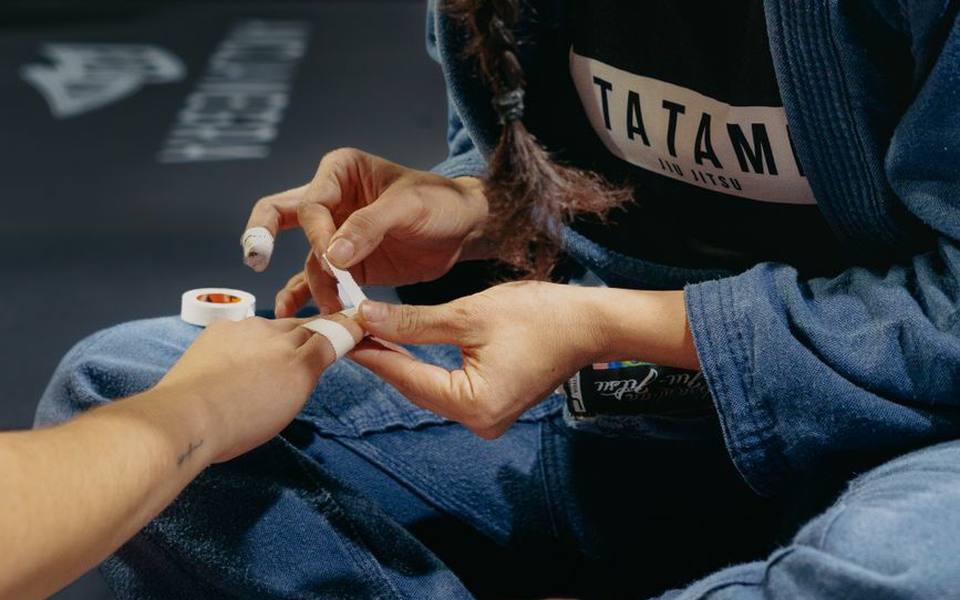
Applying medical or athletic finger tape for jiu jitsu serves two main functions: stabilizing strained ligaments and reinforcing healthy joints against future damage. Tape acts like an external collateral ligament, absorbing sudden tensile shock when an opponent violently strips a grip. By bracing the joints, taping allows practitioners with mild sprains to keep training safely without aggravating delicate tissue or tearing collateral ligaments.
Beyond structural stabilization, tape creates extra surface friction against woven cotton collars and pants. This added grip texture reduces the raw muscular squeeze needed to keep a hold, easing strain on the forearm flexors and minimizing tendon strain. Grapplers dealing with mild morning stiffness or hereditary finger swelling find that consistent wrapping keeps joint capsules warm, compressed, and protected across intense rolling rounds.
Step-by-Step Finger Taping Techniques for Grapplers
The cross-taping or 'X-method' is the most popular technique in bjj finger taping because it provides robust support without locking the finger completely straight. Begin by cutting a strip of non-elastic tape into a narrower half-inch strip. Anchor the tape with two smooth circular wraps around the base phalanx, just above the knuckle, keeping the finger bent at a slight, natural gripping angle of roughly twenty degrees.
From the lower anchor, route the tape diagonally across the joint crease to form the first half of an X. Wrap once around the middle phalanx above the joint, then cross diagonally back down across the joint to complete the cross on the palmar side. Finish the structure by applying two secure anchor wraps around the lower segment. This crisscross scaffolding absorbs lateral twisting while still allowing you to close your fist fully around a lapel.
For acute collateral sprains or swollen knuckles, buddy taping offers even more protection. This involves taping an injured finger securely to an adjacent, healthy finger, using the strong digit as an internal splint. Place small spacer strips between the fingers to prevent moisture buildup, and secure two wraps above and below the main joints. Choose thin, zinc-oxide adhesive tape that resists sweat so your wraps do not unravel mid-round.
Choosing the Right Martial Arts Belt Display
Accumulating belts represents hundreds of hours of sweat, discipline, and personal growth, making dedicated martial arts display belts setups a meaningful addition to any home office or workout room. Instead of leaving retired ranks shoved into training bags or closets, a wall-mounted karate belt holder display preserves fabric condition and reminds you how far you have come since your first white-belt lesson.
Display fixtures come in several traditional and contemporary designs depending on your aesthetic preferences and available space. The classic karate belt display rack consists of horizontal wooden slats where each folded belt is held in place by elastic straps. These racks typically accommodate six, ten, or twelve belts, matching standard adult progression timelines from entry-level rank all the way to advanced black belt degrees.
Alternative options include enclosed shadow boxes, clear acrylic hanging tubes, and custom personalized plaques featuring the practitioner's name or dojo emblem. Shadow boxes offer the advantage of protecting cotton fibers from dust, pet hair, and ambient moisture, while leaving room for tournament medals or rank certificates. When choosing a martial arts belt display, measure your rolled or folded belt thickness to ensure the mounting slots comfortably fit heavy, double-stitched belts.
Mounting and Organizing a Belt Display Rack
Installing a belt rack securely requires taking your wall surface into account. Most solid hardwood racks weigh between four and ten pounds unloaded, and adding several thick cotton belts increases that downward load. Locate wall studs using a magnetic or electronic stud finder, securing the rack with standard drywall wood screws. If wall studs do not align with your preferred display position, use heavy-duty hollow-wall drywall anchors rated for twenty pounds or more.
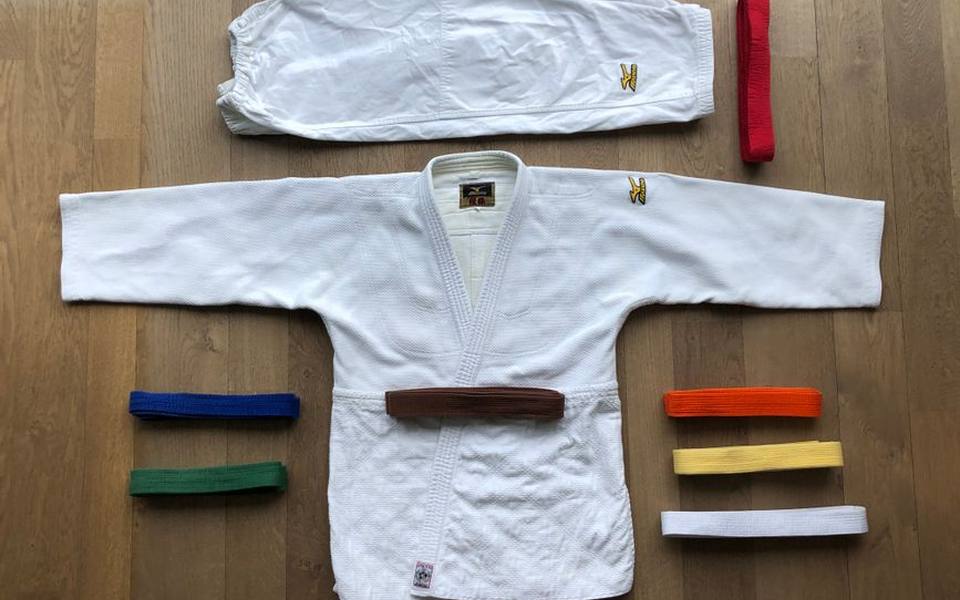
Arranging your belts chronologically creates a clean narrative of your progression. Most martial artists place their original white belt on the top slat, descending sequentially down through the colored ranks until reaching the black belt at the base. Others prefer the reverse, placing the black belt prominently on the top shelf to signify current achievement, with foundational colors supporting it from below; neither layout is wrong.
Proper folding technique keeps your belts looking sharp and uniform on the slats. Fold each belt in half repeatedly until its width matches the wooden slat, keeping the brand label or black rank sleeve facing forward. If your rack uses elastic retaining loops, slide the folded belt underneath slowly to avoid overstretching the elastic bands, ensuring clean lines and balanced symmetry across the entire wall mount.
Belt Care, Washing Debates, and Fabric Longevity
An enduring myth across combat disciplines claims that washing your martial arts belt washes away accumulated wisdom, knowledge, and fighting spirit. In reality, this superstition emerged largely in mid-twentieth-century popular culture rather than ancient tradition. From a modern hygienic standpoint, cotton belts absorb significant sweat, bodily oils, bacteria, and ringworm spores during intense training, making regular cleaning a sensible practice for skin safety.
When cleaning your belt, gentle wash settings preserve structural integrity and prevent shrinkage. Wash the belt in cold water on a delicate cycle, ideally inside a mesh laundry bag so the long cotton strap does not wrap around the washing machine agitator. Avoid bleach or heavy chemical detergents, which weaken woven stitching, degrade core foam padding, and strip rich dye from higher-ranking colored belts.
Air drying is essential for keeping belts flat, crisp, and comfortable. Machine dryers cause natural cotton weave to contract sharply, leaving the internal core stiff, wrinkled, and twisted. Hang your washed belt over a plastic hanger or drying rack away from direct, harsh sunlight. With basic laundering and careful storage, a quality martial arts belt will easily endure years of grueling mat rounds while retaining its color and structural strength.
Published 2026-09-21 · reviewed with each rebuild, last September 2026.
Find martial arts schools near you
The directory lists 32,877 martial arts schools by state and city — pick your state or use the “Near me” button in the header.
More guides
-
 Owning
Establishing a Proper Heavy Bag Routine and Striking Technique at Home
-
 Safety
Brazilian Jiu-Jitsu for Beginners: Tips, Fundamentals, and Mat Health
-
 Buying
Finding the Right Fit: A Guide to Sizing Your Jiu-Jitsu Uniform and Cross-Training Gear
-
 Money
MoneyHow Much Do Martial Arts Classes Cost? Membership Fees Breakdown
-
 Owning
What Is Mixed Martial Arts? Beginner Overview and Training Guide
-
 Owning
The History, Origins, and Physical Demands of Brazilian Jiu-Jitsu
-
 Owning
Traditional Martial Arts Guide: Understanding Wushu, Silat, and Naginata
-
 Owning
Understanding Mixed Martial Arts for Beginners
-
 Safety
How to Wrap Your Hands for Boxing: Step-by-Step Wrist and Knuckle Protection Guide
-
 Buying
Best Jiu-Jitsu Gis and Apparel: Complete Buyer's Guide and Sizing Chart
-
 Buying
BJJ vs Judo vs Wrestling vs No-Gi: Which Grappling Art Is Right for You?
-
 Buying
How to Choose the Best Jiu-Jitsu and MMA Gym Near You
-
 Owning
Brazilian Jiu-Jitsu for Beginners: Rules, Belt Ranks, and Mat Training
-
 Buying
Kickboxing Classes & Cardio Fitness Workouts Guide
-
 Owning
Martial Arts Belt Ranking Systems: Progression, Orders, and Displays
-
 Buying
Jeet Kune Do: History, Philosophy, and Modern Training Guide
-
 Buying
BJJ Gis and Uniforms Buyer's Guide: Brands, Fit, and Care
-
 Buying
Gracie Jiu-Jitsu Lineages, Academy Networks, and Training Philosophies
-
 Buying
10th Planet Jiu-Jitsu: Complete Guide to the No-Gi System and Academies
-
 Safety
Tai Chi Classes for Seniors: Health Benefits, Styles, and Practice Guide
-
 Owning
Heavy Bag and Boxing Workouts: Home Setup, Gear Selection, and Training Guide
-
 Buying
Adult Karate and Taekwondo Classes: Getting Started and Gi Sizing
-
 Owning
IBJJF Tournaments and Competition Guide: Databases, Rules, and Events
-
 Safety
Custom vs. Boil-and-Bite Mouthguards: Complete Selection and Fitting Guide
-
 Safety
Women's and Adult Self-Defense Training Guide: Techniques, Classes, and Systems
-
 Owning
Traditional Chinese Martial Arts: Shaolin, Wing Chun, Jeet Kune Do, and Gear Guide
-
 Buying
Adult Martial Arts Guide: Choosing the Right Style, Gym, and Training Class
-
 Buying
Filipino Martial Arts, Kenpo, Aikido, and HEMA: Comparing Traditional Combat Styles
-
 Owning
Heavy Bag Workout Guide: Routines, Drills, and Training for Cardio and Weight Loss
-
 Buying
Muay Thai and Cardio Kickboxing Classes: Training, Techniques, and Fitness Programs
-
 Buying
BJJ Gis, Rash Guards, and Apparel: How to Choose, Size, and Care for Jiu-Jitsu Gear
-
 Safety
Women's and Adult Self-Defense Classes: Selecting Programs for Real-World Safety
-
 Safety
Martial Arts Conditioning, High-Kick Mobility, and Protective Gear Guide
-
 Buying
Kids and Toddler Martial Arts: Complete Guide to Classes, Camps, and Family Dojos
-
 Owning
How to Hang a Heavy Bag: Ceiling and Wall Mounting Installation Guide
-
 Buying
Brazilian Jiu-Jitsu Schools, Academies, and Lineages: A Complete Guide
-
 Buying
Martial Arts Gyms, Fitness Studios, and Dojos Directory Guide
-
 Buying
Traditional Martial Arts Styles and Specialized Disciplines Guide
-
 Owning
BJJ and Martial Arts Gi Selection, Sizing, and Equipment Care Guide