Getting Started with Heavy Bag Conditioning
Striking a suspended bag provides one of the most efficient cardiovascular and muscular endurance workouts available, blending total-body engagement with high-output interval demands. Unlike stationary cardio equipment, working out with a heavy bag forces the legs, hips, core, and upper torso to work in an integrated kinetic sequence on every strike. A standard session typically lasts between twenty and forty-five minutes, structured into timed intervals of intense output followed by short active recoveries. This format elevates your heart rate rapidly while conditioning the stabilizing muscles around your shoulders, back, and hips.
When using a heavy bag for exercise, your body expends significant energy absorbing resistance upon impact and re-centering balance as the target swings. Many newcomers assume that a heavy punch bag workout targets only arm muscles, but genuine punching power originates from the ground up through the feet and hips. Because you must constantly brace your abdominal wall and shift weight, a heavy bag workout burns substantial calories while developing rotational torque and lean muscle definition across the entire body.
Approaching heavy bag training without an organized structure often leads to sloppy technique and early exhaustion. Treating your session as a series of rounds—just like competitors do inside ring sports—keeps your mental focus sharp and protects your joints from fatigue-induced breakdown. Whether your personal goal is cardiovascular conditioning, athletic agility, or steady weight reduction, having a planned heavy bag exercise routine guarantees that every punch carries deliberate mechanical purpose rather than wild, uncontrolled effort.
Essential Hand and Wrist Preparation
Before throwing a single punch in any heavy weight bag workout, securing your hands and wrists is an absolute necessity. A quality bag typically weighs between seventy and one hundred fifty pounds, offering substantial resistance that can easily sprain an unprotected wrist or bruise delicate knuckles. Trainees typically use standard 180-inch cotton hand wraps to compress the small bones of your hands, lock your thumbs securely, and stabilize your wrist joints. Skipping wraps is the primary cause of wrist sprains and soft tissue trauma among home trainees.
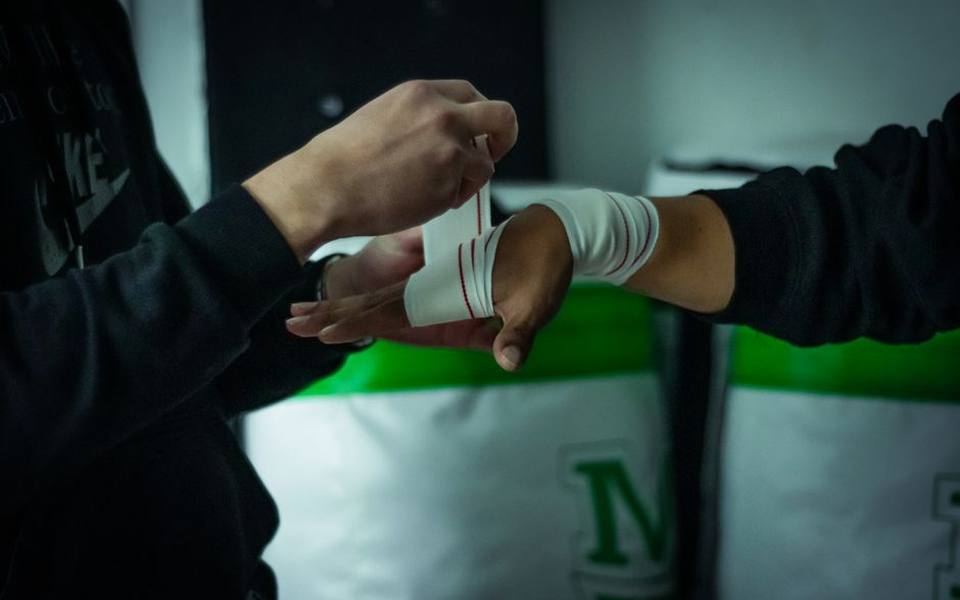
Glove selection also dictates safety and conditioning during a heavy bag punching workout. Bag gloves or standard training gloves between twelve and sixteen ounces offer the necessary foam density to cushion repetitive shock without bottoming out against dense leather or canvas. Lighter gloves may allow for faster hand speed, but they transfer excessive shock back into the forearm and elbow tendons. Investing a few minutes into proper wrapping and strapping will preserve your joints across years of heavy bag training.
Proper knuckle alignment upon impact matters just as much as external padding. Every strike should land flush across the first two large knuckles of your fist rather than the weaker ring or pinky fingers. Your wrist must remain completely straight upon contact; bending your wrist upward or downward under force invites severe ligament sprains. Taking the time to dial in this mechanical alignment ensures that your heavy punch bag workout builds lasting physical strength rather than stubborn, nagging joint inflammation.
Foundational Punches and Proper Body Mechanics
The foundation of all effective workouts for heavy bag conditioning rests upon four core punches: the jab, the straight cross, the lead hook, and the rear uppercut. The jab acts as your rangefinder and pacing tool, snapping out from your chin and turning over at the very end of extension before returning instantly to guard. Your straight cross delivers rotational drive by pivoting the rear foot and driving the hip forward, transferring power directly through the shoulder into the target.
Moving to the lead hook requires a firm pivot on the front foot, turning your torso as a single cohesive unit while keeping the elbow bent at ninety degrees. Trainees frequently make the error of swinging their arms wildly on hooks, which places immense stress on the anterior shoulder capsule instead of engaging the core. Uppercuts demand a subtle drop in your stance, generating upward force through the legs rather than simply scooping with the biceps. Practicing these heavy punching bag exercises cleanly builds a strong kinetic link through your torso.
A common pitfall during a heavy bag work out is pushing the bag rather than snapping your strikes. A pushed punch simply shoves the dense leather forward, robbing you of speed and leaving your balance compromised. Instead, aim to penetrate the surface by an inch or two and immediately retract the hand faster than you threw it out. This rapid retraction not only maximizes cardiovascular effort and shoulder stamina, but it also creates the crisp pop that characterizes disciplined striking technique.
Footwork and Distance Control Around the Bag
A static workout where your feet remain glued to one spot misses more than half the physical benefits of working out with heavy bag setups. As you strike, the bag swings and rotates, creating a dynamic moving target that mimics an active opponent. Rather than standing flat-footed, you must stay balanced on the balls of your feet, stepping smoothly in and out of striking range. Maintaining an athletic stance keeps your calves and quadriceps constantly loaded, which significantly raises the overall metabolic output of the session.
Circling the bag requires coordinated lateral steps where your feet never cross over each other. If moving to your left, your lead foot steps first followed immediately by the trailing foot; when moving right, the rear foot leads. This steady footwork keeps your base wide enough to strike at any given millisecond. By circling consistently throughout your heavy bag workout routine, you prevent the suspended weight from pushing you backward, teaching your nervous system to stabilize dynamic momentum seamlessly.
Distance management is equally vital for keeping your joints safe and sustaining a realistic tempo. Striking when the bag is swinging violently toward you doubles the impact force on your wrists and elbows, while reaching for a bag that is swinging away forces hyperextension. Learn to intercept the bag at the apex of its forward swing or take an angle to let it drift harmlessly past your shoulder. Practicing this spatial awareness turns an ordinary heavy bag punching workout into an engaging, high-level athletic challenge.
Structuring a High-Intensity Cardio Routine
Structuring your training into high-intensity interval rounds is the gold standard for developing cardiovascular endurance and accelerating metabolic conditioning. A standard round framework mirrors amateur boxing, featuring two or three minutes of continuous work followed by one minute of complete or active rest. During the active work window, you vary your punch output between steady rhythmic combinations and explosive five-to-ten-second flurries. This variable tempo forces your cardiovascular system to alternate between aerobic stamina and anaerobic thresholds.
A typical beginner routine might begin with three rounds of two minutes each, gradually expanding to five or six rounds as physical stamina improves. During the rest interval, avoid collapsing onto a bench; keep moving, take deep nasal breaths, and sip small amounts of water to encourage efficient lactic acid clearance. By pacing your energy across timed intervals, your heavy bag workout produces sustained calorie burn that continues for hours after your gloves come off. Many individuals looking for body recomposition find this format far more engaging than steady-state treadmill running.
If your schedule permits, testing your progress against structured conditioning environments can provide excellent technical benchmarks. Many athletic clubs and specialized centers offer dedicated kickboxing classes where instructors refine your round-timing and punch selection under direct supervision. Even if you primarily train alone at home, experiencing structured intervals alongside peers provides valuable perspective on keeping an honest work pace when physical fatigue sets in during late rounds.
Full-Body Conditioning by Adding Lower Body Strikes
Incorporating kicks and knee strikes transforms basic boxing drills into an exhausting full-body conditioning session. Striking a suspended bag with your shins and feet requires immense hip mobility, rotational torque, and core stability. Roundhouse kicks demand a full pivot on the supporting foot, rotating your pelvis completely over to drive the dense shin bone through the target. This broad range of movement activates the glutes, hamstrings, and deep abdominal obliques to a degree that punches alone cannot match.
Knee strikes deliver unmatched abdominal conditioning while training explosive hip extension. By clinching the upper portion of the bag with your hands and pulling downward, you drive your rear knee sharply upward into the midsection of the cylinder. Performing continuous alternating knees for thirty seconds elevates heart rate nearly to maximum output. These multi-joint heavy punching bag exercises recruit the largest muscle groups in the human body, drastically increasing energy expenditure during a heavy weight bag workout.
Mixing punches, kicks, and knees requires seamless stance transitions and disciplined balance recovery. This comprehensive striking approach is standard fare across modern MMA training facilities, where athletes use striking bags to prepare for unpredictable, multi-range physical demands. As your lower limbs fatigue, maintaining proper posture prevents your lower back from rounding during impact. Introducing leg strikes just twice a week adds profound functional variety to your regular heavy bag exercise routine.
Targeted Drills for Weight Management and Fat Loss
For those pursuing weight loss, heavy bag work delivers an exceptional balance of high caloric expenditure and muscle preservation. A rigorous forty-minute striking session typically burns between three hundred and five hundred calories, depending on your body weight, punch volume, and baseline intensity. Unlike repetitive low-impact cardio, striking against heavy resistance requires forceful muscular contractions that stimulate muscle retention while drawing heavily upon stored energy reserves throughout the entire workout.
Volume-focused interval drills are particularly effective when targeting body fat reduction. One proven protocol involves twenty seconds of maximum-speed straight punches followed by ten seconds of active footwork, repeated continuously for four minutes without stopping. These micro-intervals deplete glycogen rapidly and push your cardiovascular system into high anaerobic debt. Over time, pairing these high-output drills with balanced nutrition creates the consistent caloric deficit necessary for steady, sustainable fat loss.
While solo bag work provides an outstanding metabolic challenge, pairing your efforts with comprehensive fat loss programs can provide the nutritional framework and accountability required for long-term health transformations. Striking burns energy rapidly, but maintaining proper hydration, protein intake, and recovery sleep guarantees that the weight shed comes from adipose tissue rather than lean muscle mass. Consistency across months, rather than single exhaustive sessions, remains the single most important factor in seeing visible physique results.
Integrating Defensive Movement and Head Motion
A heavy bag may be an inanimate object, but treating it like a stationary dummy quickly creates terrible habits and reduces the athletic value of your workout. In a realistic striking exchange, you must constantly move your head off the centerline before and after throwing strikes. Incorporating defensive maneuvers—such as slipping to the outside of an imagined counterpunch or ducking beneath the swinging bag—forces your quadriceps and core obliques to fire continuously throughout every round.
Practice throwing a clean jab-cross combination, immediately rolling under the swinging bag as it travels past your shoulder, and pivoting outward to deliver a sharp hook. This constant shift between offense, defense, and lateral footwork doubles the physical intensity of your heavy bag training. You will find that ducking and slipping tire your legs far more quickly than throwing arm strikes alone, providing an intense functional leg workout without requiring added iron weights.
Defensive motion also sharpens your focus, turning what could be mindless repetition into a mentally demanding exercise in timing and spatial awareness. Martial artists practicing traditional styles often stress the principle of moving the head and feet in harmony, ensuring that balance is never sacrificed for raw power. By refusing to stand directly in front of the bag between combinations, your heavy punch bag workout evolves into a fluid, expressive display of athletic agility.
A Complete Weekly Training Schedule for Longevity
Establishing a realistic weekly frequency prevents overuse injuries while ensuring steady progress in cardiovascular conditioning. For most trainees, two to four dedicated heavy bag sessions per week offer an ideal balance between training stimuli and musculoskeletal recovery. Striking places repetitive compressive forces on your wrist joints, elbows, and shoulder labrums. Allowing at least one full day of rest or active recovery between intense striking workouts gives connective tissues adequate time to repair and adapt to heavy impact loads.
A well-rounded weekly split might alternate between technique-focused days and high-intensity interval conditioning. On lighter days, focus strictly on clean punch mechanics, fluid footwork, and precise breath control for four or five moderate rounds. On high-output conditioning days, shorten the round times and push the tempo with rapid punch flurries and powerful kick combinations. This alternating approach prevents physical burnout and protects your nervous system from deep systemic fatigue.
Consistent post-workout care is another non-negotiable aspect of sustainable heavy bag training. After removing your wraps, spend five to ten minutes thoroughly stretching your chest, forearms, lats, and hip flexors. Performing gentle wrist circles and forearm stretches relieves the chronic tension caused by tightly gripping boxing gloves for multiple rounds. Prioritizing mobility and joint care ensures that your heavy bag workout routine remains a productive, lifelong fitness habit rather than a brief source of joint soreness.
Common Errors and When to Seek Coached Instruction
Even enthusiastic trainees frequently develop bad habits when working out alone without professional feedback. The most widespread error is arm-punching, where the individual uses only shoulder and triceps strength without engaging the hips or pivoting the feet. Not only does this cut striking power in half, but it also places unnatural strain on the rotator cuff muscles. Another frequent error is dropping the non-punching hand toward the waist, leaving the head completely unprotected while striking.
Holding your breath during combinations is another subtle mistake that quickly induces premature exhaustion. You should exhale sharply with a short hiss or grunt on every single strike you throw. This audible exhalation braces your abdominal wall against potential impact, stabilizes the spine, and forces your lungs to maintain a rhythmic respiratory cycle. When you hold your breath under exertion, your blood pressure spikes and oxygen delivery to working muscles drops dramatically within minutes.
If you find yourself hitting a plateau or struggling with recurring wrist or shoulder pain, getting personalized coaching is the most reliable remedy. Qualified martial arts instructors can spot subtle flaws in stance, wrist alignment, and hip drive within minutes, correcting technical blind spots before they turn into chronic physical problems. Taking a few fundamental classes provides a solid mechanical foundation, giving you the confidence and technique needed to extract maximum athletic benefit from every future heavy bag workout.
Published 2026-09-21 · reviewed with each rebuild, last September 2026.
Find martial arts schools near you
The directory lists 32,877 martial arts schools by state and city — pick your state or use the “Near me” button in the header.
More guides
-
 Owning
Establishing a Proper Heavy Bag Routine and Striking Technique at Home
-
 Safety
Brazilian Jiu-Jitsu for Beginners: Tips, Fundamentals, and Mat Health
-
 Buying
Finding the Right Fit: A Guide to Sizing Your Jiu-Jitsu Uniform and Cross-Training Gear
-
 Money
MoneyHow Much Do Martial Arts Classes Cost? Membership Fees Breakdown
-
 Owning
What Is Mixed Martial Arts? Beginner Overview and Training Guide
-
 Owning
The History, Origins, and Physical Demands of Brazilian Jiu-Jitsu
-
 Owning
Traditional Martial Arts Guide: Understanding Wushu, Silat, and Naginata
-
 Owning
Understanding Mixed Martial Arts for Beginners
-
 Safety
How to Wrap Your Hands for Boxing: Step-by-Step Wrist and Knuckle Protection Guide
-
 Buying
Best Jiu-Jitsu Gis and Apparel: Complete Buyer's Guide and Sizing Chart
-
 Buying
BJJ vs Judo vs Wrestling vs No-Gi: Which Grappling Art Is Right for You?
-
 Buying
How to Choose the Best Jiu-Jitsu and MMA Gym Near You
-
 Owning
Brazilian Jiu-Jitsu for Beginners: Rules, Belt Ranks, and Mat Training
-
 Buying
Kickboxing Classes & Cardio Fitness Workouts Guide
-
 Owning
Martial Arts Belt Ranking Systems: Progression, Orders, and Displays
-
 Buying
Jeet Kune Do: History, Philosophy, and Modern Training Guide
-
 Buying
BJJ Gis and Uniforms Buyer's Guide: Brands, Fit, and Care
-
 Buying
Gracie Jiu-Jitsu Lineages, Academy Networks, and Training Philosophies
-
 Buying
10th Planet Jiu-Jitsu: Complete Guide to the No-Gi System and Academies
-
 Safety
Tai Chi Classes for Seniors: Health Benefits, Styles, and Practice Guide
-
 Owning
Heavy Bag and Boxing Workouts: Home Setup, Gear Selection, and Training Guide
-
 Buying
Adult Karate and Taekwondo Classes: Getting Started and Gi Sizing
-
 Owning
IBJJF Tournaments and Competition Guide: Databases, Rules, and Events
-
 Safety
Custom vs. Boil-and-Bite Mouthguards: Complete Selection and Fitting Guide
-
 Safety
Women's and Adult Self-Defense Training Guide: Techniques, Classes, and Systems
-
 Owning
Traditional Chinese Martial Arts: Shaolin, Wing Chun, Jeet Kune Do, and Gear Guide
-
 Buying
Adult Martial Arts Guide: Choosing the Right Style, Gym, and Training Class
-
 Buying
Filipino Martial Arts, Kenpo, Aikido, and HEMA: Comparing Traditional Combat Styles
-
 Buying
Muay Thai and Cardio Kickboxing Classes: Training, Techniques, and Fitness Programs
-
 Buying
BJJ Gis, Rash Guards, and Apparel: How to Choose, Size, and Care for Jiu-Jitsu Gear
-
 Safety
Women's and Adult Self-Defense Classes: Selecting Programs for Real-World Safety
-
 Owning
Martial Arts Belts and Ranks: Belt Order, Taping, and Display Racks Guide
-
 Safety
Martial Arts Conditioning, High-Kick Mobility, and Protective Gear Guide
-
 Buying
Kids and Toddler Martial Arts: Complete Guide to Classes, Camps, and Family Dojos
-
 Owning
How to Hang a Heavy Bag: Ceiling and Wall Mounting Installation Guide
-
 Buying
Brazilian Jiu-Jitsu Schools, Academies, and Lineages: A Complete Guide
-
 Buying
Martial Arts Gyms, Fitness Studios, and Dojos Directory Guide
-
 Buying
Traditional Martial Arts Styles and Specialized Disciplines Guide
-
 Owning
BJJ and Martial Arts Gi Selection, Sizing, and Equipment Care Guide